






Introduction
Paid software plays an important role in today’s digital world. Individuals, students, professionals, and businesses use paid software to complete tasks more efficiently and securely.
Unlike free tools, it offers premium features, regular updates, technical support, and stronger security.
These advantages make paid software a popular choice for users who need reliable tools for work, education, design, communication, and business management.
Many companies in the United States develop paid services to meet different user needs. Some products require a one-time purchase, while others use monthly or yearly subscription plans.
Popular examples include productivity software, accounting software, graphic design tools, cybersecurity programs, and project management platforms.
As technology continues to grow, more people choose paid because it helps them save time, improve productivity, and reduce technical issues.
Businesses especially depend on software to manage daily operations, protect sensitive data, and support team collaboration.
Professional users also prefer paid software because they receive access to advanced tools that help them deliver better results.
While free software can handle basic tasks, paid software often provides greater value through enhanced performance and dedicated customer support.
What Is Paid Software?

Paid software is software that users must purchase before they can use it fully. A company or developer creates the software and sells a license or subscription to customers.
Unlike free tools, it usually offers advanced features, better support, regular updates, and stronger security.
Many businesses and professionals choose software because it helps them work faster and more efficiently.
The software industry in the United States generates billions of dollars every year. Many companies rely on paid to manage projects, communicate with teams, protect data, create designs, and handle business operations.
Paid often comes with dedicated customer support, which helps users solve problems quickly. This support becomes important when businesses depend on software for daily operations.
Software companies use different pricing models. Some companies charge a one-time fee, while others offer monthly or yearly subscriptions.
Cloud-based software, also known as Software as a Service (SaaS), has become very popular in the USA because users can access it from anywhere with an internet connection.
Many people think paid software only costs money. However, users often receive extra value in return.
Companies invest in development, testing, security updates, and customer support. These investments help create reliable products that serve personal and business needs for many years.
Key Points About
- Requires payment before full use
- Offers premium features
- Includes regular updates
- Provides technical support
- Often delivers better security
- Common in business environments
- Available through licenses or subscriptions
Benefits of Paid Software
Paid software provides many advantages for individuals, businesses, students, and professionals. The biggest advantage is access to advanced features that free software may not offer.
Users can complete complex tasks more efficiently and improve productivity. Many paid software solutions include tools designed specifically for professional work environments.
Security is another major benefit. Software companies regularly release updates and patches to protect users from vulnerabilities and cyber threats.
Organizations that handle customer information, financial records, or sensitive business data often choose paid services because they need dependable security measures. (TechPlanet)
Customer support adds significant value. When problems occur, users can contact support teams for assistance.
This support reduces downtime and helps businesses continue operations without major interruptions. Many software providers offer email support, live chat, phone support, and knowledge bases.
Paid also improves reliability. Developers continuously test products and release improvements based on user feedback.
These improvements help software run smoothly and reduce technical issues. Many professionals consider reliability more important than cost because software problems can affect productivity and revenue. (Softech Alert)
Businesses in the United States often invest in paid because it saves time. A software tool that saves a few minutes each day can save hundreds of hours every year.
Many business owners view software as an investment rather than an expense.
Main Benefits of Paid
- Advanced features
- Better security
- Reliable updates
- Professional support
- Improved performance
- Greater scalability
- Better user experience
Types of Paid Software
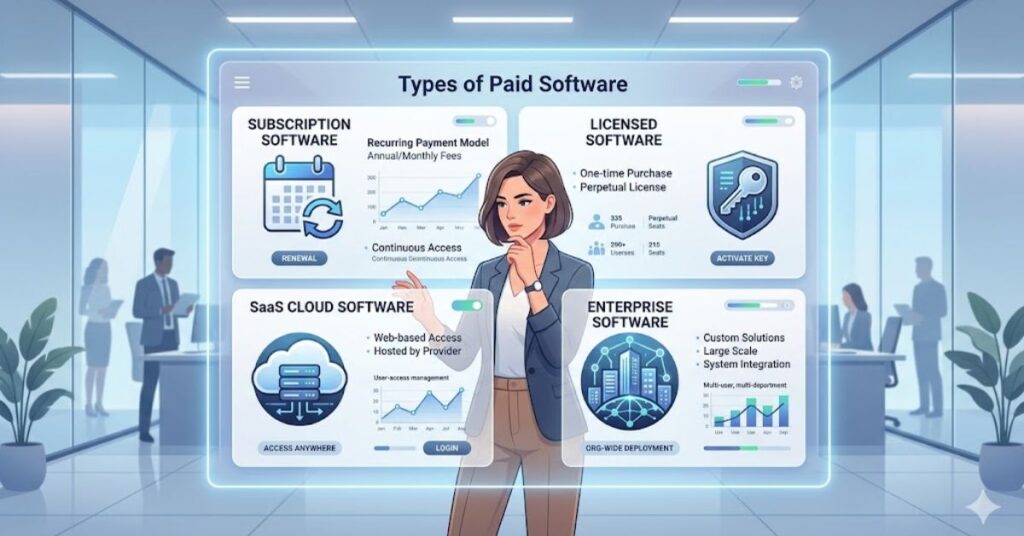
The software market offers several types of paid software. Each type serves different user needs. Understanding these categories helps users choose the right solution for their requirements.
Traditional licensed software remains popular. Users pay once and receive a permanent license. This model works well for people who prefer a one-time payment instead of recurring fees. Examples include certain desktop applications and specialized business tools.
Subscription-based software has become increasingly common. Users pay monthly or yearly fees to access software.
This model allows companies to provide continuous updates and new features. Many modern software providers use subscriptions because they create steady revenue and support ongoing development.
Cloud-based software or SaaS solutions operate through web browsers. Users access these applications online without installing large programs on their devices.
Businesses often choose SaaS products because employees can work from different locations and devices.
Enterprise software targets large organizations. These solutions manage business operations, customer relationships, financial systems, and employee activities.
Enterprise software often includes customization options and advanced support services.
| Type of Paid Software | Description | Common Users |
| Licensed Software | One-time purchase | Individuals and businesses |
| Subscription Software | Monthly or yearly payment | Most modern users |
| SaaS Software | Cloud-based access | Businesses and remote teams |
| Enterprise Software | Large-scale business solutions | Large organizations |
| Professional Software | Industry-specific tools | Designers, engineers, developers |
Popular Categories
- Productivity software
- Design software
- Security software
- Business management software
- Accounting software
- Video editing software
- Project management software
Paid Software vs Free Software
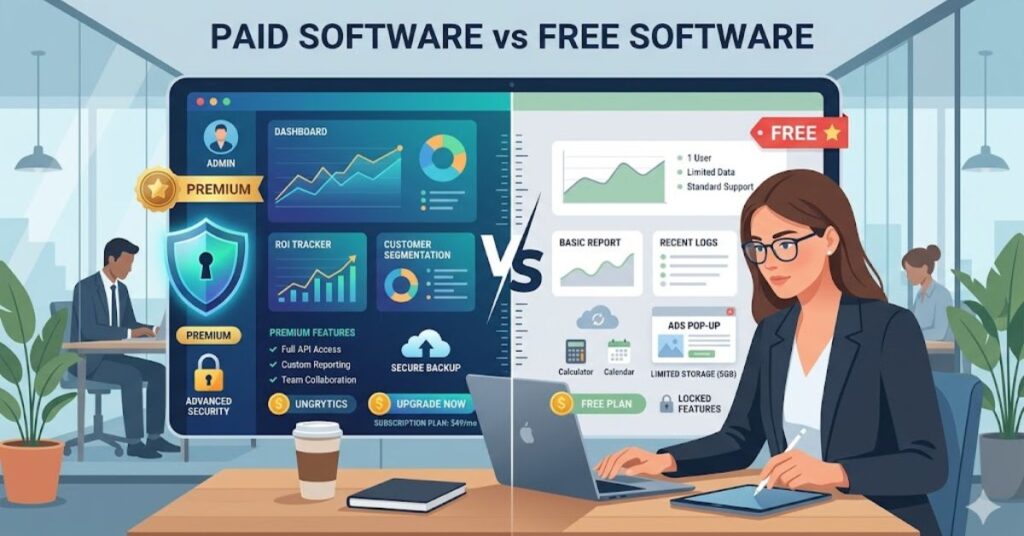
Many users compare paid software with free software before making a decision. Both options offer advantages, but the best choice depends on user needs.
Free software attracts users because it requires no upfront investment. Students, hobbyists, and casual users often start with free tools.
Many free applications provide enough features for basic tasks. However, users may encounter limitations such as advertisements, storage restrictions, limited functionality, or reduced support.
Paid removes many of these limitations. Users gain access to complete feature sets, professional support, and regular updates.
Businesses often choose software because they cannot risk interruptions caused by unsupported or limited applications.
The total value extends beyond the purchase price. A paid application may save time, automate repetitive tasks, and reduce errors.
These benefits can outweigh the initial cost. Many professionals believe that software should help them work more effectively rather than simply reduce expenses.
Another important difference involves scalability. As businesses grow, they need software that can handle larger workloads.
Paid software often includes advanced integrations, collaboration tools, and customization options that support growth.
| Feature | Paid Software | Free Software |
| Cost | Requires payment | No cost |
| Features | Advanced | Limited |
| Support | Professional support | Community support |
| Security | Frequent updates | Varies |
| Ads | Usually no ads | Often includes ads |
| Scalability | High | Limited |
Differences Between Software and Free
- Paid software offers more features
- Free software reduces initial costs
- Paid software provides dedicated support
- Free software may include limitations
- Paid software often delivers stronger security
Best Examples of Paid Software
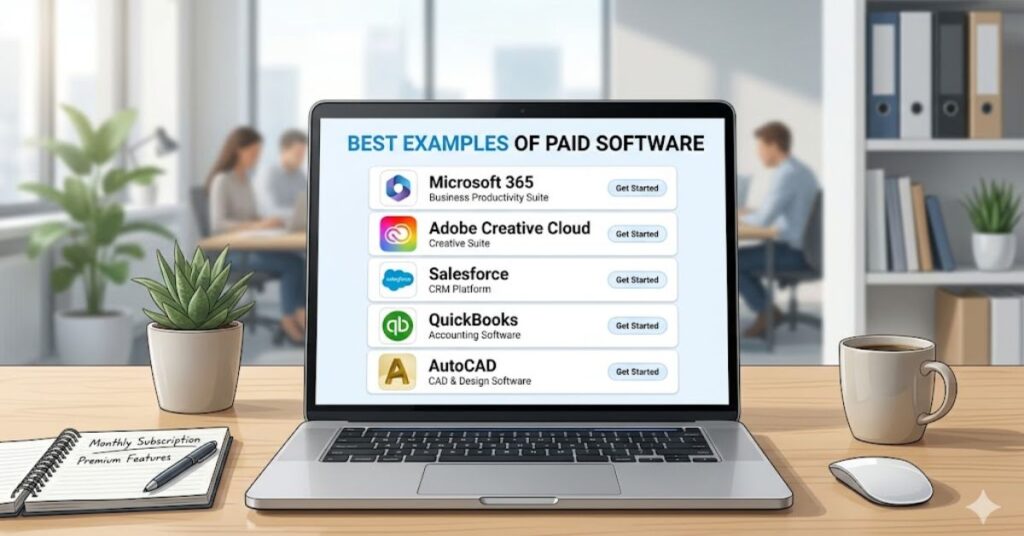
Many well-known software products dominate the paid market. These applications help millions of users across the United States and around the world.
Microsoft 365 remains one of the most popular productivity suites. It includes Word, Excel, PowerPoint, Outlook, and collaboration tools.
Businesses, schools, and professionals use it daily for communication and document management.
Adobe Creative Cloud provides professional design and multimedia tools. Designers use Photoshop, Illustrator, Premiere Pro, and After Effects to create graphics, videos, and marketing materials. The platform operates through a subscription model.
Salesforce helps companies manage customer relationships and sales processes. Organizations use it to track leads, automate workflows, and improve customer service. It remains a leading CRM platform in the United States.
QuickBooks supports accounting and financial management. Small businesses use it to manage invoices, payroll, taxes, and expenses.
AutoCAD serves architects, engineers, and designers. The software enables precise drafting and technical design work.
Popular Examples
- Microsoft 365
- Adobe Creative Cloud
- Salesforce
- QuickBooks
- AutoCAD
- Slack Premium
- Zoom Workplace
- Norton Security
How to Choose the Right Paid Software

Choosing the right paid software requires careful evaluation. Users should start by identifying their goals. Different software products solve different problems, so understanding requirements helps narrow the options.
Budget plays an important role. Companies should compare pricing plans and determine whether a subscription or a one-time license offers better value.
They should also consider long-term costs rather than focusing only on the initial purchase price.
Feature requirements matter as well. Some software packages include many advanced functions that users may never need. Selecting software with the right balance of features can prevent unnecessary spending.
Customer support should remain a key consideration. Reliable support can save time and reduce frustration when technical problems occur.
Businesses that depend heavily on software often prioritize support quality when making purchasing decisions.
Security and compatibility also deserve attention. Users should verify that the software works with existing systems and follows modern security standards.
Reading reviews, testing trial versions, and comparing competitors can help users make informed decisions.
Factors to Consider Before Buying
- Budget
- Features
- Customer support
- Security
- Scalability
- User reviews
- Compatibility
- Update frequency
Future of Paid Software
The future of paid software looks strong. Cloud computing, artificial intelligence, automation, and remote work continue to shape software development.
Companies increasingly deliver software through subscription models because they can provide continuous improvements and support.
Artificial intelligence already enhances many software products. AI-powered tools help users create content, analyze data, automate tasks, and improve decision-making.
Businesses across the USA continue to invest in software that increases productivity and reduces operational costs.
Security will remain a major focus. As cyber threats evolve, software developers must release stronger protection features and faster updates.
Paid providers often lead these efforts because they have dedicated development teams and resources. (TechPlanet)
The demand for remote collaboration tools will continue growing. Teams need software that supports communication, file sharing, project management, and virtual meetings.
Paid software companies will likely expand these capabilities to meet changing workplace needs.
Future Trends
- Artificial intelligence integration
- Cloud-based platforms
- Better cybersecurity
- Automation features
- Remote work tools
- Enhanced collaboration systems
- Subscription-based services
Conclusion
Paid software plays an important role in modern personal and business computing. It offers advanced features, strong security, professional support, and reliable performance.
While free software works well for basic tasks, many users choose paid software because it saves time and improves productivity.
Businesses across the United States continue to invest in paid services to support growth, protect data, and streamline operations.
By understanding the different types, benefits, and pricing models, users can select the best software for their specific needs.
FAQs
What is software?
software requires payment via a license, subscription, or purchase before users can access all features.
Why do people buy software?
People buy paid software because it offers advanced features, better security, regular updates, and professional customer support.
Is paid better than free?
Paid often provides more features and support, but the best choice depends on the user’s needs and budget.
What are examples of paid software?
Popular examples include Microsoft 365, Adobe Creative Cloud, Salesforce, QuickBooks, and AutoCAD.
Does paid software include updates?
Most paid software includes regular updates that improve performance, security, and functionality.
Can businesses benefit from paid software?
Yes. Businesses often use paid software to improve productivity, automate tasks, manage data, and support growth.
Is subscription considered paid?
Yes. Subscription-based requires recurring payments and is considered paid.