

Quick Answer
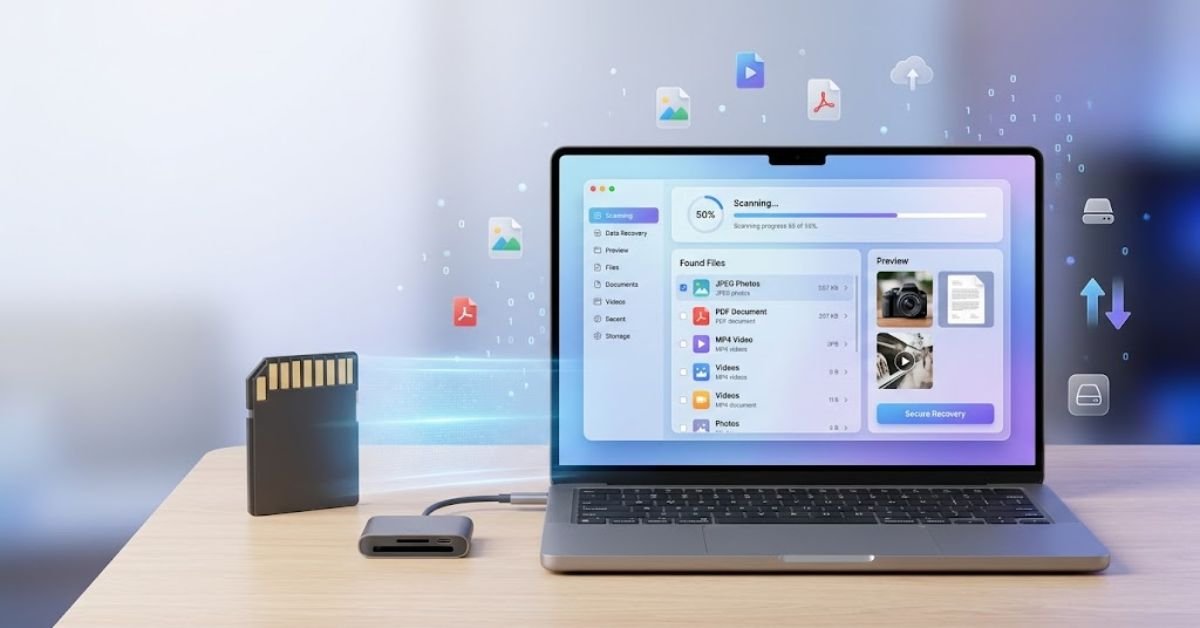
SD recovery software Mac helps recover deleted, formatted, corrupted, or missing files from SD and microSD cards.
It works by scanning the card for recoverable file data and saving recovered files to another drive. Stop using the card immediately after data loss, avoid formatting it, and use a trusted recovery tool.
Author Information
Author: Gulnaz Malik
Role: Founder, Publisher & Technology Content Specialist
Experience: 5+ Years in Technology, AI, Software & Digital Innovation
Content Review: All content follows Google’s latest EEAT guidelines and includes fact-checked information from official documentation, trusted technology sources, industry reports, and practical research to ensure accuracy, reliability, and up-to-date insights.
Introduction
Losing photos, videos, documents, or other files from an SD card can feel stressful. The problem becomes even more confusing when your Mac cannot open the card or shows an error message.
Fortunately, you may recover many lost files with the right SD recovery software Mac solution. Recovery software can scan an SD card and find files that the operating system no longer displays.
The most important rule comes first: stop using the SD card after you notice data loss. New files can overwrite deleted data. Once new data overwrites the old information, recovery becomes much harder.
Mac users can choose from several recovery methods. macOS also includes Disk Utility, which can check and repair certain storage problems.
However, Disk Utility does not work like dedicated recovery software. Apple explains that First Aid can repair some formatting and directory problems, but it cannot detect or repair every disk problem.
This guide explains how SD recovery software works on Mac, when you should use it, how to recover files safely, which mistakes you should avoid, and when professional recovery makes more sense.
Table of Contents
- What Is SD Recovery Software for Mac?
- When Do You Need SD Recovery Software Mac?
- Common SD Card Problems on Mac
- How SD Recovery Software Mac Works
- How to Recover SD Card Files on Mac
- Free vs Paid SD Recovery Software
- How to Choose the Right Recovery Software
- Is SD Recovery Software Safe?
- Common Recovery Mistakes
- Troubleshooting SD Card Recovery Problems
- Latest Trends in SD Card Recovery
- Key Takeaways
- Conclusion
- FAQs
- SEO Tags
- Internal Linking Suggestions
- Authoritative External References
- Social Media Title
- Social Media Description
What Is SD Recovery Software for Mac?
SD recovery software for Mac refers to applications that scan SD, SDHC, SDXC, and microSD cards for lost or deleted files.
The software looks beyond the normal file list. When you delete a photo, for example, macOS may remove its visible reference while some of the actual data remains on the card. Recovery software can sometimes locate that remaining data.
You can use recovery tools for many file types, including:
- Photos
- Videos
- Documents
- PDFs
- Audio files
- RAW camera files
- ZIP archives
- Project files
- Other common file formats
SD recovery software can help after accidental deletion, formatting, file-system corruption, or certain read errors.
However, no recovery application can guarantee success. The condition of the card matters. The amount of new data written after deletion also matters.
Your Mac also plays an important role. A reliable card reader can improve the connection between your SD card and Mac. If the card disconnects repeatedly, recovery software may struggle to scan it correctly.
If you want to understand how software interacts with physical storage devices, TechCrebia’s guide on the difference between software and hardware provides useful background.
When Do You Need SD Card Recovery Software?
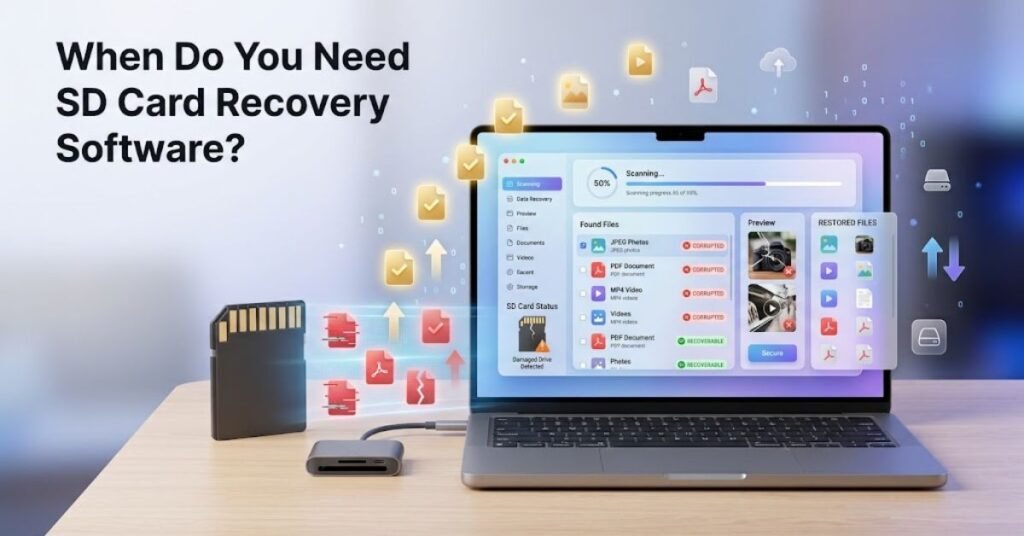
You usually need recovery software when normal file access no longer works.
For example, imagine that you insert a camera SD card into your Mac after a photography session. Finder shows an empty folder, but the card still reports used storage. That situation may indicate that the files still exist but the file system cannot display them correctly.
Recovery software can also help after accidental deletion. If you delete important photos and immediately stop using the card, you may have a better chance of recovering them.
You should consider recovery software when:
- You accidentally delete files.
- You format an SD card by mistake.
- Your Mac asks you to format the card.
- The card shows missing folders.
- Photos suddenly disappear.
- The card shows RAW or unreadable storage.
- The camera reports a card error.
- Files become inaccessible after a transfer problem.
SanDisk also recommends recovery software for functional memory cards after deletion, accidental formatting, or certain errors. Its support guidance notes that recovery success depends on the condition of the card and recommends regular backups.
Do not immediately format a card just because macOS displays an error. Formatting can change the storage structure and make recovery more difficult.
Common SD Card Recovery Problems on Mac
SD cards can fail for several reasons. Some problems involve the file system, while others involve the card reader, connector, controller, or flash memory.
Deleted Files
Accidental deletion remains one of the easiest recovery situations. If you stop writing new data to the card, recovery software may locate the deleted files.
Accidental Formatting
Formatting removes the normal file structure that Finder uses. Recovery software may still find old data, depending on the type of format and whether new data has replaced the old files.
Corrupted File System
A corrupted file system can prevent macOS from displaying your files. The data may still exist even though Finder cannot access it.
SD Card Not Mounting
Sometimes macOS detects the card but does not mount its volume. Disk Utility can help you determine whether the Mac can see the physical device.
Physical Damage
A cracked card, damaged contacts, failed controller, or internal flash problem can require professional recovery. Software cannot repair physical hardware.
Camera Errors
Cameras can display messages such as card error, memory card error, or card needs formatting. Do not accept formatting if you still need the files.
How Does SD Recovery Software Work?
Most recovery applications follow a similar process.
First, the software identifies the SD card. It then analyzes the card’s storage structure and searches for recoverable information.
A quick scan may examine existing file-system information. A deeper scan may search the storage more extensively for file signatures and fragments.
The application normally shows a preview before recovery. This feature helps you determine whether the software can actually recover the files.
A typical recovery process looks like this:
- Connect the SD card to your Mac.
- Open the recovery application.
- Select the SD card.
- Start a scan.
- Review the discovered files.
- Preview important files when available.
- Select the files you need.
- Save them to another storage device.
Never save recovered files back to the same SD card. Doing so can overwrite other recoverable information.
For example, if you recover photos from a 64GB SD card, save them to your Mac’s internal storage or an external SSD. Do not create a new folder on the damaged card and save the recovered photos there.
How to Recover SD Card Files on Mac
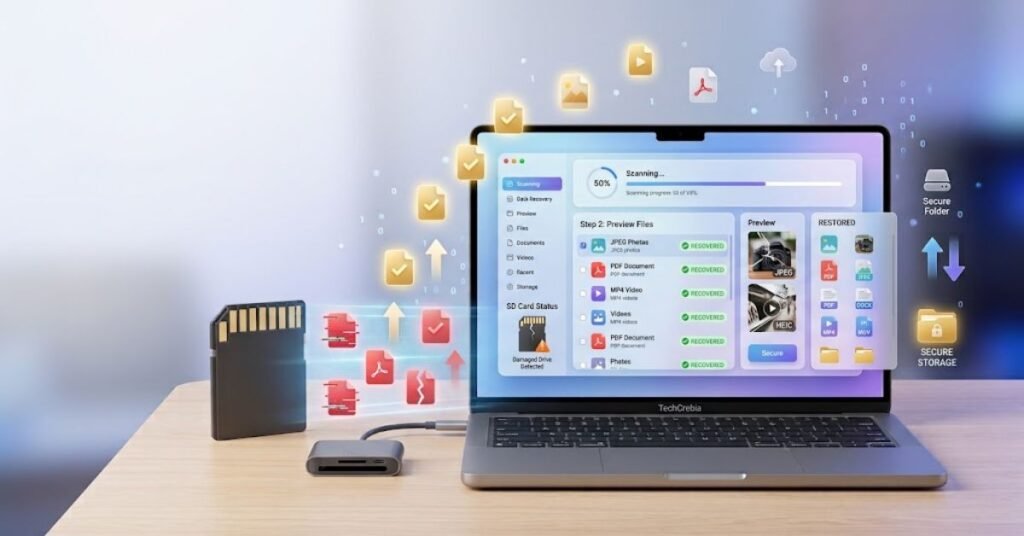
Before you begin, stop using the card. Do not take new photos, copy files to it, rename folders, or format it.
Prepare the SD Card
- Remove the card from the camera or device.
- Connect it to your Mac with a reliable card reader.
- Avoid repeatedly reconnecting a failing card.
- Check whether macOS detects the physical device.
- Keep enough free space on another drive for recovered files.
Scan the SD Card
Open your chosen recovery application and select the physical SD card rather than an unrelated Mac volume.
Start with a standard scan if the software provides that option. If the software finds nothing useful, try its deeper scan.
A deep scan can take much longer on large SDXC cards. A 256GB card, for example, can require significant time depending on the reader, card condition, and software.
Do not interrupt the scan without a good reason.
Preview and Recover Files
After scanning, organize the results by file type or folder when the application supports those options.
Look for:
- Original file names
- File previews
- Folder structure
- File size
- File extensions
- Creation dates
Recover the most important files first.
Save them to a different drive. This simple rule protects the remaining data on the SD card.
If you regularly manage large amounts of digital work, you can also learn how modern productivity software helps manage files and workflows.
Free vs Paid SD Recovery Software
Free recovery tools can work well for simple cases. They can provide a useful option when you have a small number of files to recover.
Paid applications often provide a more polished interface, deeper scanning, better file previews, broader file-system support, or higher recovery limits.
| Feature | Free Recovery Software | Paid Recovery Software |
| Basic scanning | Usually available | Yes |
| Deep scanning | Depends on tool | Usually available |
| File preview | Often limited | Usually stronger |
| Recovery limits | May apply | Usually higher |
| Technical support | Limited | Often available |
| Beginner-friendly interface | Varies | Usually better |
| Advanced recovery features | Limited | More common |
Do not choose software only because it advertises a high recovery rate. Test whether it can actually detect your files before paying whenever the software provides a preview or trial scan.
Your goal should focus on recoverability, safety, compatibility, and ease of use, not marketing claims.
How to Choose SD Recovery Software for Mac
Choosing the right tool can save time and reduce the risk of making the situation worse.
Look for software that supports modern macOS versions and common SD card formats. Also check whether the application can scan cards that do not mount normally.
A good recovery tool should provide a preview feature. Previewing files gives you evidence that the software can identify useful data before you start the final recovery.
Also check the recovery destination. Reliable software should allow you to save recovered data to another drive.
Consider these factors:
- macOS compatibility
- SDXC and microSD support
- RAW photo support
- Video recovery
- Deep scanning
- File preview
- Recovery limits
- External drive support
- Ease of use
- Developer reputation
- Security and download source
Avoid unknown applications that demand unnecessary permissions or install unrelated software.
You can also review TechCrebia’s broader software and hardware guide if you want a clearer understanding of how recovery software communicates with physical storage.
Is SD Recovery Software Safe?
Trusted SD recovery software can provide a safe way to attempt file recovery, but you should still follow basic precautions.
The biggest danger does not usually come from scanning. The bigger risk comes from writing new data to the damaged card.
Never install recovery software onto the SD card itself. Install it on your Mac’s internal drive.
Never save recovered files to the source card.
Download recovery software from the developer’s official website or a trusted distribution source. Avoid cracked versions and suspicious installers.
You should also create backups after successful recovery. A single SD card should never become the only copy of important photos or documents.
For professional photographers, a practical workflow includes copying files from the SD card to a computer and creating another backup before deleting or reusing the card.
Common SD Card Recovery Mistakes
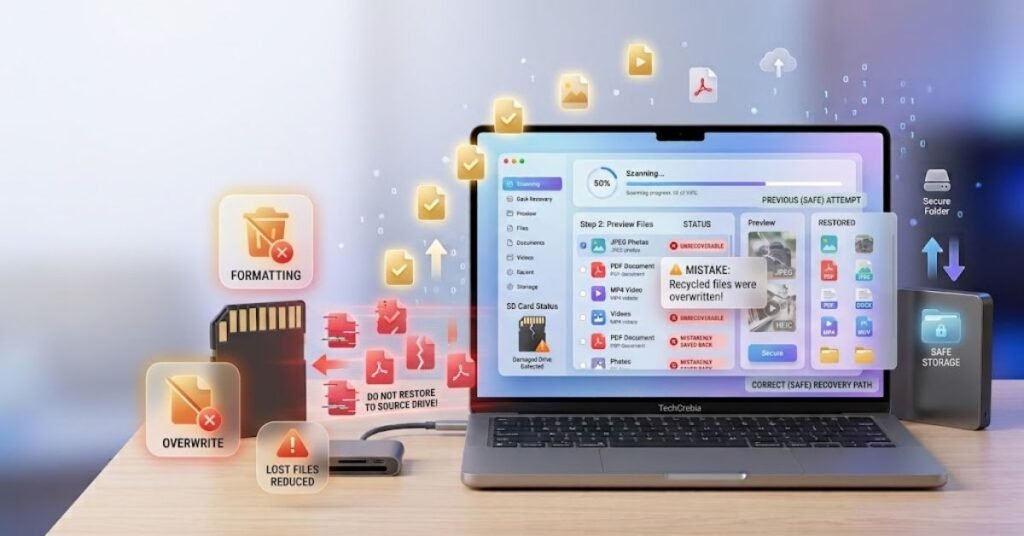
Many recovery attempts fail because users take the wrong action before starting the scan.
The first common mistake involves continuing to use the card. Every new photo, video, or document can overwrite old information.
The second mistake involves formatting the card. macOS or a camera may suggest formatting when it cannot read the file system. Do not format the card if you still need its files.
Another mistake involves saving recovered files back to the SD card. This can overwrite other recoverable data.
Users also sometimes install several recovery programs and run scans repeatedly. That approach can waste time and increase unnecessary activity on a problematic device.
Avoid these mistakes:
- Do not take new photos on the card.
- Do not format it.
- Do not delete more files.
- Do not save recovered files to it.
- Do not install recovery software on it.
- Do not trust cracked recovery applications.
- Do not repeatedly reconnect a physically failing card.
- Do not assume every lost file can recover.
If the card contains irreplaceable professional or personal data, consider professional recovery before experimenting with advanced repair methods.
Troubleshooting SD Recovery on Mac
Sometimes recovery software cannot find the SD card. In that situation, first determine whether your Mac detects the hardware.
Open Disk Utility and choose View > Show All Devices. Apple recommends this view when working with storage devices. You can then check whether the SD card appears as a physical device or volume.
Mac Does Not Detect the SD Card
- Try another card reader.
- Try another USB port or adapter.
- Restart the Mac.
- Check the SD card contacts for visible dirt.
- Test the card on another compatible computer.
- Check Disk Utility.
- Check System Information if necessary.
If the card never appears anywhere, software recovery may not work.
SD Card Appears but Does Not Open
- Do not format the card.
- Check Disk Utility.
- Try recovery software.
- Avoid writing new files.
- Save recovered data to another drive.
Disk Utility’s First Aid feature can repair some formatting and directory problems, but Apple warns that it cannot repair every storage problem.
Recovery Software Finds Files but They Look Damaged
This situation can happen when the original data suffered fragmentation, overwriting, or corruption.
Try a deeper scan if available. Preview different files before recovery.
If every recovered video or photo appears damaged, the card may have suffered more serious corruption or physical problems.
Do not keep modifying the card. Professional recovery may provide a better option.
Latest SD Recovery Software Trends
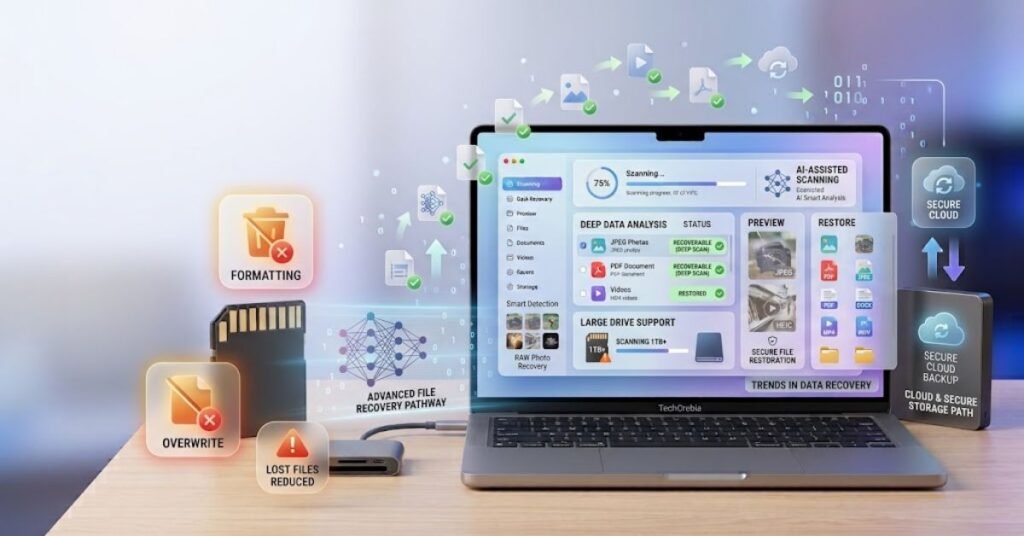
SD card recovery continues to evolve as storage capacities and camera file sizes increase.
Modern cameras create large RAW photographs and high-resolution video files. A single recording session can fill a large portion of an SDXC card.
Recovery tools therefore need to handle larger cards and more complex file structures.
Another important trend involves better file-signature scanning. Some tools can identify files even when the original folder structure no longer works.
Cloud-connected workflows also influence recovery. Many photographers now copy images to computers, external SSDs, NAS systems, or cloud services shortly after shooting.
Modern Macs also rely heavily on fast USB-C and Thunderbolt accessories. A high-quality card reader can reduce connection problems during large transfers.
The recovery process also increasingly focuses on non-destructive scanning. Good recovery software reads the source card instead of changing its contents during the initial scan.
For users, the most important trend remains prevention. Recovery software provides a second chance, but a reliable backup system provides much stronger protection.
You can also explore other TechCrebia software guides, such as the PhysX System Software guide, to learn more about how specialized software tools serve different technical purposes.
Key Takeaways
- SD recovery software Mac can recover many deleted, formatted, or inaccessible files when the card remains readable.
- Stop using the SD card immediately after data loss.
- Never format the card before attempting recovery.
- Save recovered files to another drive.
- Use file previews to confirm recovery quality.
- Free tools can work for simple recovery cases.
- Paid tools often provide more advanced features.
- Disk Utility can repair some storage problems but does not replace dedicated recovery software.
- Physically damaged or completely undetected cards may require professional recovery.
- Backups remain the best protection against permanent data loss.
Conclusion
SD recovery software Mac provides a practical way to recover lost photos, videos, documents, and other files from SD and microSD cards.
The most important step happens before you even start the software: stop using the card. Avoid formatting, new file transfers, and unnecessary changes.
Next, connect the card with a reliable reader and check whether your Mac detects it. If the card appears, recovery software can scan it for recoverable data. Preview important files before recovery and always save recovered data to another drive.
Disk Utility can help diagnose and repair certain storage problems, but it cannot solve every recovery situation. If the card has physical damage or your Mac cannot detect it at all, professional recovery may provide a safer option.
Finally, do not rely on recovery software as your only protection. Keep multiple copies of important photos and files. A simple backup routine can save you from a much more difficult recovery process later.
For additional information about SD and flash-memory recovery, SanDisk’s official data recovery guidance provides manufacturer-backed information about recovery options and limitations.
FAQs
Can I recover deleted files from an SD card on Mac?
Yes. Recovery software can often find deleted files when new data has not overwritten them.
What is the best SD recovery software Mac users can use?
The best choice depends on your card, file types, macOS version, recovery needs, and budget. Look for reliable scanning and file-preview features.
Can I recover a formatted SD card on Mac?
Yes, recovery software may recover files from a formatted card if the old data remains intact and new data has not overwritten it.
Should I format an SD card that Mac cannot read?
No. If you need the files, avoid formatting the card before attempting recovery.
Can Disk Utility recover deleted files?
Disk Utility can repair certain storage problems, but it does not function as a dedicated deleted-file recovery tool.
Why does my SD card show empty folders?
File-system corruption, accidental formatting, hidden files, or directory damage can cause this problem.
Where should I save recovered files?
Save recovered files to your Mac’s internal storage or another external drive, never to the original SD card.
Can recovery software repair a physically damaged SD card?
No. Software cannot repair physical damage. A professional data recovery service may help with serious hardware failures.
10 SEO Tags
- SD recovery software Mac
- SD card recovery Mac
- SD card data recovery
- recover deleted files Mac
- recover SD card photos
- Mac data recovery software
- recover formatted SD card
- microSD recovery Mac
- corrupted SD card recovery
- SD card recovery software
5 Internal Linking Suggestions with Anchor Text
- SD card recovery guide — Link to your dedicated SD memory recovery article when available.
- data recovery software guide — Use this anchor for a broader recovery-software article.
- Mac software guides — Use this anchor for a Mac-focused software category or article.
- software and hardware explained — https://techcrebia.com/difference-between-software-and-hardware/
- productivity software guide — https://techcrebia.com/productivity-software/
2 Authoritative External References
- Apple Support — Repair a storage device with Disk Utility
- SanDisk Support — Memory Card and Flash Drive Data Recovery
Social Media Title
SD Recovery Software Mac: Recover Deleted Files Easily
Social Media Description
Lost photos or files from an SD card? Learn how SD recovery software works on Mac, recover deleted data safely, fix common errors, and avoid recovery mistakes.