






Introduction
Productivity software helps people complete tasks faster and manage work more efficiently. Businesses, students, freelancers, and remote teams use productivity software every day. These tools improve communication, organization, planning, and time management.
Modern workplaces depend heavily on digital tools. Companies now use productivity software to manage projects, store files, hold meetings, track progress, and automate daily tasks. Small businesses also use these tools to compete with larger companies.
Technology continues to change the way people work. Teams now work from different cities and countries. Productivity software allows everyone to stay connected and complete tasks together in real time. These tools reduce confusion and save time.
Many productivity software tools also use artificial intelligence. AI features help users create content, organize schedules, and automate repetitive work. This technology increases speed and reduces manual effort.
Different industries use different types of productivity. Teachers use educational tools. Designers use creative collaboration software. Business teams use project management and communication platforms. Every industry now depends on digital productivity tools.
This guide explains everything about software. You will learn its types, benefits, features, challenges, future trends, and the best tools available today.
What Is Productivity Software

Productivity software refers to digital applications that help users complete tasks efficiently. These tools improve organization, communication, collaboration, planning, and workflow management.
In the past, people used paper documents, physical calendars, and manual systems. Today, productivity software replaces many traditional work methods. Employees now manage tasks online and share files instantly.
Software supports both individual users and large organizations. A student may use note-taking software for studies, while a company may use enterprise project management software for hundreds of employees.
These tools cover many work areas. Some tools focus on writing documents. Others focus on team communication or task management. Many modern platforms combine multiple features in one system.
People use software because it saves time. Workers can complete projects faster and reduce errors. Managers can track progress more clearly. Teams can communicate without delays.
Productivity also improves flexibility. Remote workers can join meetings, access files, and update projects from anywhere. This flexibility became very important after remote work increased worldwide.
The software market continues to grow rapidly. New startups launch productivity tools every year. Large technology companies also invest heavily in this industry.
Common Uses of Productivity Software
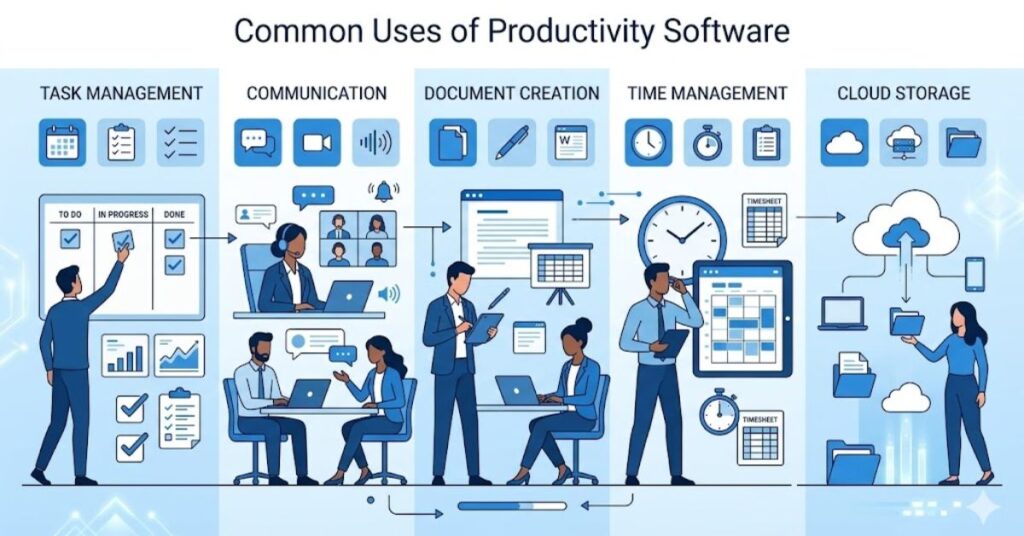
Task Management
- Organizes daily tasks
- Tracks deadlines
- Assigns responsibilities
- Monitors progress
Communication
- Supports video meetings
- Allows instant messaging
- Improves team collaboration
- Reduces email overload
Document Management
- Stores files securely
- Shares documents quickly
- Supports cloud access
- Allows real-time editing
Time Management
- Tracks working hours
- Improves scheduling
- Reduces distractions
- Increases efficiency
Productivity Software Benefits for Businesses

Productivity software gives many advantages to businesses of all sizes. Companies use these tools to improve performance, reduce costs, and increase employee efficiency.
One major benefit is better communication. Team members can send messages instantly and hold online meetings. Fast communication reduces delays and confusion.
Another important benefit is improved project management. Managers can assign tasks and track progress in real time. Teams stay organized because everyone knows their responsibilities.
Software also improves teamwork. Employees can edit documents together from different locations. Cloud-based systems allow instant updates for all users.
Many businesses save money with productivity. Companies reduce paper usage and lower travel costs through virtual meetings. Automation also reduces manual labor.
Employee productivity increases significantly when teams use the right tools. Workers spend less time searching for files or managing repetitive tasks. This allows employees to focus on important work.
Customer service also improves. Teams respond faster because they can access information quickly. Businesses can manage customer data and communication efficiently.
Modern productivity supports remote work. Employees can work from home while staying connected to their teams. This flexibility improves employee satisfaction.
Security features also help businesses protect data. Most productivity platforms use encryption and cloud backup systems to reduce risks.
Major Business Advantages of Productivity Software
Better Team Collaboration
- Teams work together easily
- Employees share updates quickly
- Remote communication improves
- Projects move faster
Increased Efficiency
- Automation saves time
- Fewer manual tasks
- Faster workflows
- Better organization
Cost Reduction
- Lower office expenses
- Reduced travel costs
- Less paper usage
- Better resource management
Improved Decision Making
- Real-time analytics
- Better reporting systems
- Faster data access
- Improved planning
Productivity Software Features That Improve Work

Modern productivity software includes many powerful features that help users manage work effectively. Different software tools provide different functions, but most platforms focus on organization, communication, and collaboration.
Cloud storage is one important feature. Users can store files online and access them from any device. This system prevents data loss and supports remote work.
Task management tools also play a major role. Users can create task lists, assign deadlines, and monitor project progress. These features help teams stay organized.
Collaboration tools allow multiple users to work on the same document at the same time. Real-time editing improves teamwork and reduces delays.
Calendar integration helps users manage schedules and meetings. Employees receive reminders for deadlines and appointments. This feature improves time management.
Many productivity tools now include AI-powered automation. Artificial intelligence can organize emails, generate reports, summarize meetings, and suggest workflow improvements.
Security remains another critical feature. Companies protect sensitive information through password protection, encryption, and multi-factor authentication.
Mobile access also improves flexibility. Users can manage work through smartphones and tablets. This feature supports remote and hybrid work environments.
Analytics and reporting features provide insights into team performance. Managers can identify delays and improve workflows based on data.
Important Productivity Software Features
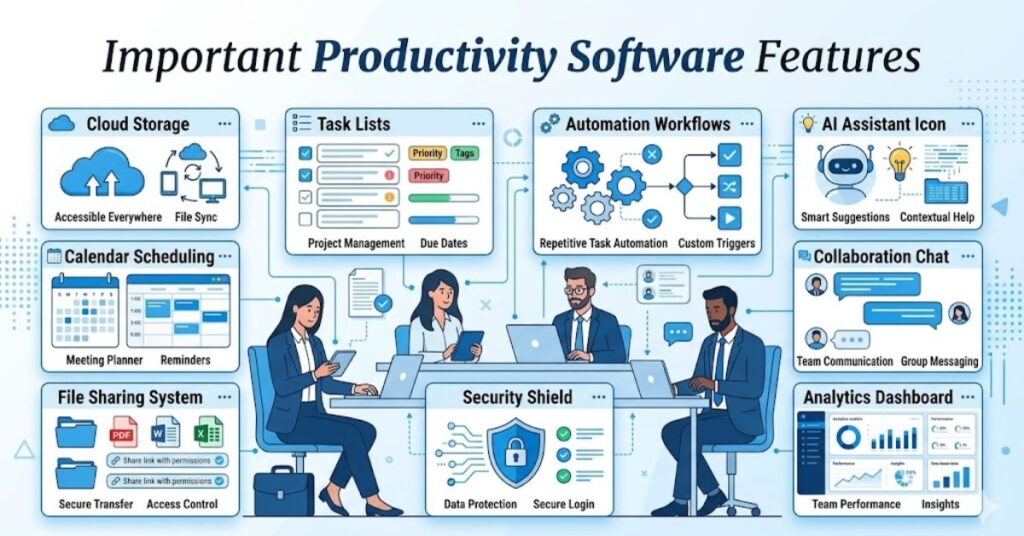
Cloud-Based Access
- Access files anywhere
- Supports remote work
- Reduces hardware dependency
- Improves flexibility
Collaboration Tools
- Real-time editing
- Team communication
- Shared workspaces
- Instant feedback
Automation Features
- Automatic reminders
- Workflow automation
- AI-generated summaries
- Smart scheduling
Security Features
- Data encryption
- User permissions
- Backup systems
- Secure file sharing
Best Types of Productivity Software

Different types of productivity software help users manage different tasks. Some tools focus on communication, while others focus on organization or creativity.
Project management software helps teams organize projects and deadlines. These tools improve teamwork and task tracking. Businesses use them to manage daily operations.
Communication software allows employees to connect instantly. Video conferencing and chat platforms improve collaboration between remote workers.
Document creation software helps users write reports, create presentations, and manage spreadsheets. Offices and schools depend heavily on these tools.
Time management software helps users track work hours and reduce distractions. Freelancers and remote workers often use these platforms.
Cloud storage software allows secure online file storage. Users can access files from multiple devices and share documents easily.
Customer relationship management software helps businesses manage customer data and communication. Sales teams use CRM systems to improve customer service.
Creative productivity tools support designers, marketers, and content creators. These platforms help teams manage visual projects and campaigns.
AI productivity tools represent a growing category. These tools automate repetitive work and improve efficiency through artificial intelligence.
Popular Types of Productivity
Project Management Software
- Organizes tasks
- Tracks deadlines
- Supports teamwork
- Improves workflow
Communication Software
- Video meetings
- Instant messaging
- Team collaboration
- File sharing
Office Software
- Word processing
- Spreadsheet management
- Presentation creation
- Document editing
AI Productivity
- Smart automation
- Content generation
- Workflow optimization
- AI scheduling
Productivity Software for Remote Work

Remote work has increased rapidly in recent years. Businesses now depend heavily on productivity software to support distributed teams.
Communication tools became essential for remote employees. Video conferencing software allows teams to hold meetings from different locations. Instant messaging platforms improve daily communication.
Cloud-based productivity allows employees to access work files remotely. Workers no longer need office computers to complete tasks.
Task management software helps managers monitor remote teams. Employees can update task progress and submit work online. This system improves accountability.
Remote work software also improves flexibility. Employees can work from home, in coworking spaces, or while traveling.
Many companies now use virtual collaboration tools for brainstorming and project planning. Digital whiteboards and collaborative documents help teams share ideas.
Cybersecurity became more important because remote work increased online activity. Productivity providers now invest heavily in secure systems and data protection.
Employee well-being also improved through productivity tools. Better organization reduces stress and prevents work overload.
Companies continue adopting hybrid work systems. Productivity will remain essential for future work environments.
Remote Work Productivity Software Features
Virtual Collaboration
- Online brainstorming
- Shared documents
- Team discussions
- Digital workspaces
Remote Communication
- Video calls
- Team chat
- Voice meetings
- Instant updates
Work Tracking
- Task monitoring
- Progress reports
- Time tracking
- Performance analysis
Flexible Access
- Mobile support
- Cloud access
- Multi-device syncing
- Remote file sharing
Top Productivity Software Tools in 2026

The productivity software market includes many powerful tools. Different platforms serve different industries and work styles.
Microsoft 365 remains one of the most popular productivity suites. Businesses use it for documents, spreadsheets, presentations, and collaboration.
Google Workspace also dominates the market. It supports cloud collaboration and real-time editing.
Project management platforms continue growing rapidly. Many businesses use specialized software to manage tasks and teamwork.
Communication tools became essential after remote work expanded. Companies now rely heavily on messaging and video meeting platforms.
AI-powered productivity tools also gained popularity. These platforms automate workflows and reduce repetitive tasks.
Many startups now compete with large technology companies. New productivity platforms focus on simplicity and user experience.
Businesses choose software based on their needs. Small companies may prefer affordable cloud tools, while large organizations require advanced enterprise systems.
Popular Productivity Software Platforms
| Software Type | Main Purpose | Common Users |
| Microsoft 365 | Office productivity | Businesses |
| Google Workspace | Cloud collaboration | Teams |
| Trello | Task management | Small teams |
| Asana | Project management | Companies |
| Slack | Team communication | Remote teams |
| Notion | Knowledge management | Creators |
| Zoom | Video meetings | Businesses |
| Monday.com | Workflow management | Enterprises |
Reasons People Use These Tools
Easy Collaboration
- Real-time teamwork
- Quick communication
- Shared access
- Faster updates
Cloud Integration
- Online storage
- Device syncing
- Remote access
- Secure backup
User-Friendly Design
- Simple interfaces
- Easy navigation
- Fast learning
- Flexible customization
Challenges of Productivity Software
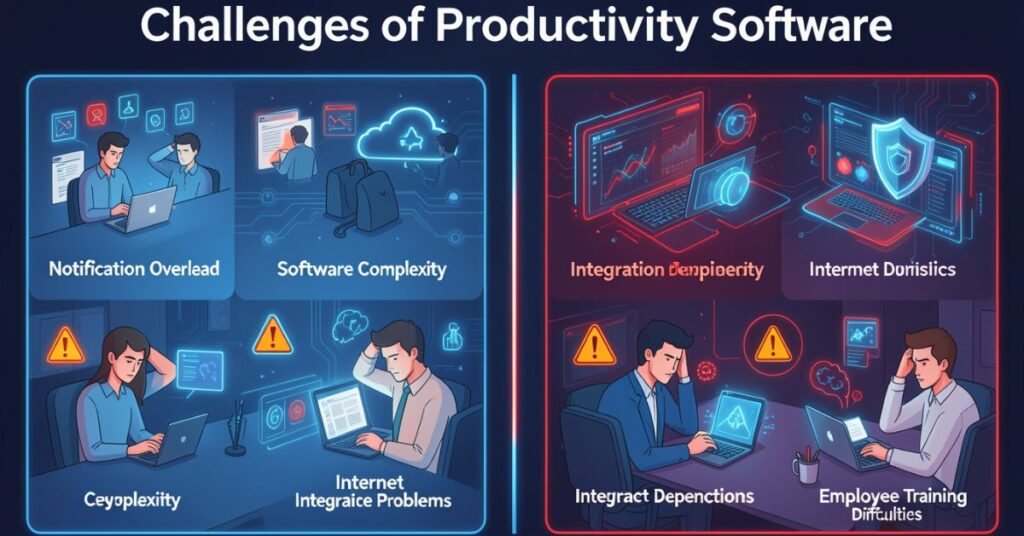
Although productivity software provides many benefits, users also face several challenges.
One common issue is software overload. Many employees use too many tools at the same time. This situation can create confusion and reduce efficiency.
Learning new software also takes time. Employees may struggle with complicated systems and advanced features.
Subscription costs can become expensive for businesses. Companies often pay monthly fees for multiple productivity platforms.
Security risks also remain a concern. Hackers may target cloud-based systems and steal sensitive information.
Internet dependency creates another challenge. Many productivity software tools require stable internet connections. Poor connectivity can interrupt work.
Some teams also face communication overload. Constant notifications and messages may distract employees and reduce focus.
Software integration problems can affect workflow. Different platforms may not work smoothly together.
Businesses must train employees properly to maximize productivity and software benefits. Without training, workers may not use tools efficiently.
Common Productivity Software Challenges
Too Many Applications
- Confusing workflows
- Multiple logins
- Notification overload
- Reduced focus
Security Concerns
- Data breaches
- Privacy risks
- Cyber attacks
- Weak passwords
Employee Training
- Learning difficulties
- Slow adaptation
- Technical confusion
- Reduced productivity initially
Cost Management
- Monthly subscriptions
- Upgrade expenses
- Licensing fees
- Hidden costs
Future Trends in Productivity Software

The future of productivity software looks very exciting. Artificial intelligence will continue transforming workplace technology.
AI-powered automation will become more advanced. Software will automatically organize schedules, generate reports, and manage repetitive tasks.
Voice-controlled productivity tools may also become more common. Users will complete tasks through voice commands.
Virtual reality and augmented reality may improve remote collaboration. Teams could meet in virtual offices and interact digitally.
Cybersecurity improvements will remain important. Productivity companies will invest heavily in advanced protection systems.
Mobile will continue growing. Workers increasingly use smartphones and tablets for professional tasks.
Personalized user experiences will also improve. AI systems will analyze user behavior and suggest workflow improvements.
Businesses will continue adopting hybrid work models. I will play a major role in supporting flexible workplaces.
Integration between different software platforms will improve. Users will manage multiple tasks through connected systems.
Future Productivity Software Trends
Artificial Intelligence
- Smart automation
- AI assistants
- Predictive analytics
- Intelligent workflows
Remote Collaboration
- Virtual offices
- Advanced video meetings
- Digital teamwork
- Remote management tools
Mobile Productivity
- Smartphone access
- Mobile collaboration
- Cloud synchronization
- Flexible work systems
Better Security
- AI cybersecurity
- Advanced encryption
- Secure cloud systems
- Stronger authentication
How to Choose the Best Productivity Software

Choosing the right productivity software depends on business goals and user needs.
Companies should first identify their problems. Some teams need better communication, while others need stronger project management.
Businesses should also compare software features carefully. Important features include collaboration tools, security systems, mobile access, and cloud storage.
Ease of use matters greatly. Complicated systems may reduce employee productivity instead of improving it.
Pricing also affects software selection. Small businesses often prefer affordable subscription plans.
Customer support quality remains important. Reliable support helps businesses solve technical problems quickly.
Integration capabilities also matter. Productivity software should connect smoothly with existing business systems.
Businesses should test software before purchasing long-term plans. Free trials help teams understand software performance.
Tips for Choosing Productivity Software
Understand Business Needs
- Identify workflow problems
- Define goals
- Analyze team requirements
- Compare features
Check Software Features
- Collaboration tools
- Security systems
- Automation capabilities
- Mobile access
Compare Pricing
- Subscription plans
- Hidden costs
- Upgrade fees
- Long-term value
Test Before Buying
- Use free trials
- Evaluate performance
- Check user experience
- Gather team feedback
Conclusion
Productivity software has become essential for modern work environments. Businesses, students, freelancers, and organizations use these tools to improve efficiency and manage tasks effectively.
Technology continues to rapidly change workplace systemsSoftware. software now supports communication, project management, collaboration, and automation.
Companies that use productivity effectively often achieve better results. Teams work faster, communicate clearly, and stay organized.
Artificial intelligence will continue shaping the future of productivity . Smart automation and AI-powered tools will improve workplace efficiency even more.
Choosing the right productivity requires careful planning. Businesses should focus on their needs, budget, and long-term goals.
The demand for productivity software will continue growing in the coming years. Digital transformation and remote work trends will drive this growth further.
Organizations that adopt modern productivity software early will gain strong competitive advantages in the future.
FAQs
What is productivity software?
Productivity software includes digital tools that help users manage tasks, communication, collaboration, and workflows more efficiently.
Why is productivity software important?
Productivity software improves efficiency, saves time, supports teamwork, and helps businesses manage projects effectively.
Which industries use productivity software?
Almost every industry uses productivity software, including education, healthcare, finance, technology, marketing, and retail.
Is productivity software useful for small businesses?
Yes. Small businesses use productivity software to improve organization, communication, and workflow management at affordable costs.
How does AI improve productivity software?
AI automates repetitive tasks, improves scheduling, generates reports, and helps users work faster and more efficiently.
What are the most popular productivity software tools?
Popular productivity software tools include Microsoft 365, Google Workspace, Slack, Zoom, Trello, Asana, and Notion.
Can productivity software support remote work?
Yes. Productivity software helps remote teams communicate, share files, manage projects, and collaborate from different locations.