






Quick Answer
Adaptive Software Development (ASD) is an iterative approach that helps software teams handle changing requirements and uncertainty.
It uses three repeating phases: Speculate, Collaborate, and Learn. Teams continuously use feedback to improve the product and adjust the next development cycle.
Short Author Bio
Author: Gulnaz Malik
Gulnaz Malik is a technology writer with 5+ years of experience.
She covers software development, software guides, and technology trends.
Her goal is to explain complex technology topics in simple English.
Introduction
Software development changes fast. Customer needs change. Markets move quickly. Technology improves every day.
Because of this, software teams need methods that help them adjust without slowing down. Adaptive Software Development helps teams manage these constant changes by using flexible planning, continuous feedback, and iterative improvement.
Adaptive Software Development (ASD) is a software development approach that helps teams create software while accepting change instead of avoiding it.
Teams work in short cycles, collect feedback, improve the product, and continue building better versions over time. ASD focuses on learning, teamwork, and flexibility instead of strict planning.
Traditional methods often depend on fixed plans. Adaptive Software Development follows a different path. It allows teams to update goals and features during development. This process reduces delays and creates products that match user needs more effectively.
Adaptive Software Development Definition
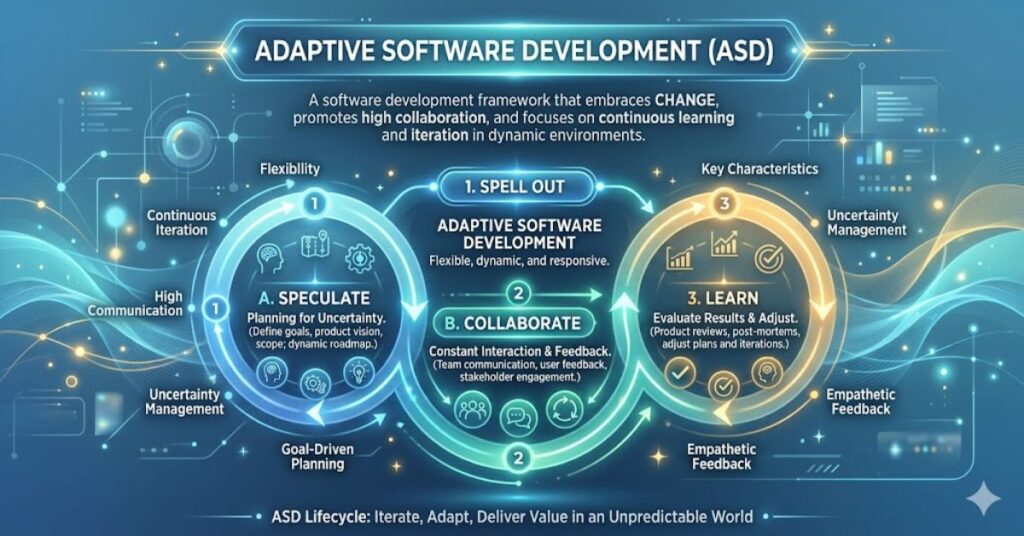
Adaptive Software Development is an iterative software methodology created to manage projects where requirements change frequently. Jim Highsmith and Sam Bayer introduced this approach as an evolution of Rapid Application Development (RAD). It later influenced modern Agile practices.
The main idea behind Adaptive Software is simple.
Instead of asking:
“How can we follow the original plan?”
ASD asks:
“How can we learn and improve while building?”
This approach helps teams deliver working software faster and adapt continuously.
Key ideas of Adaptive Software
- Accept change
- Build in short cycles
- Collaborate continuously
- Learn from every release
- Improve after feedback
- Focus on customer value
Adaptive Software Development Life Cycle
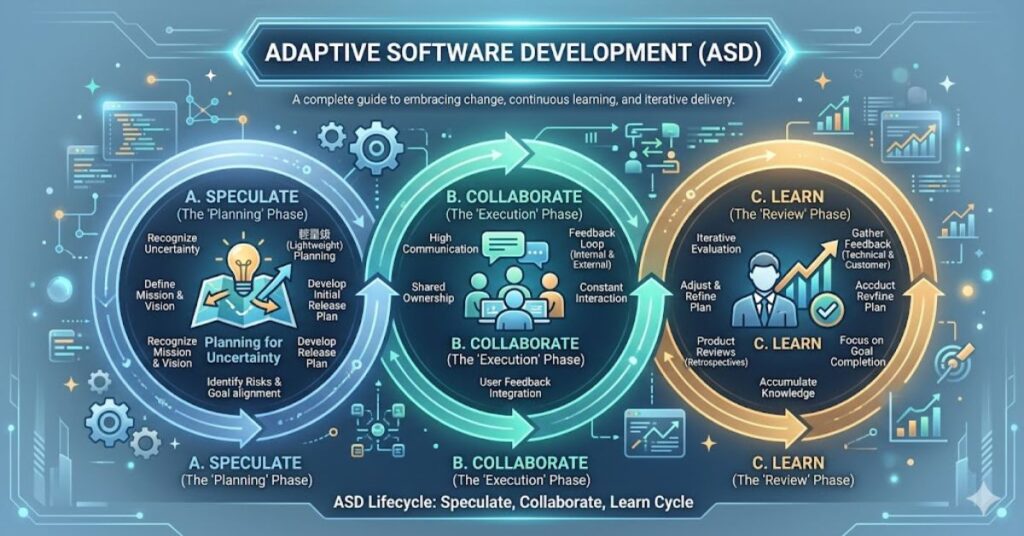
The Software Development model follows three major stages.
Unlike traditional models, these stages repeat continuously.
Speculate
- Create flexible plans
- Define goals instead of fixed tasks
- Accept uncertainty
- Prepare for future changes
Collaborate
- Developers work together
- Customers share feedback
- Teams solve problems quickly
- Communication stays open
Learn
- Review outcomes
- Measure performance
- Improve future releases
- Adjust based on lessons learned
These three stages form the foundation of Adaptive Development.
Software Development Cycle Table
| Stage | Purpose | Main Activity |
| Speculate | Flexible planning | Define goals |
| Collaborate | Teamwork | Build and improve |
| Learn | Continuous improvement | Review and adapt |
Why Adaptive Software Development Is Important
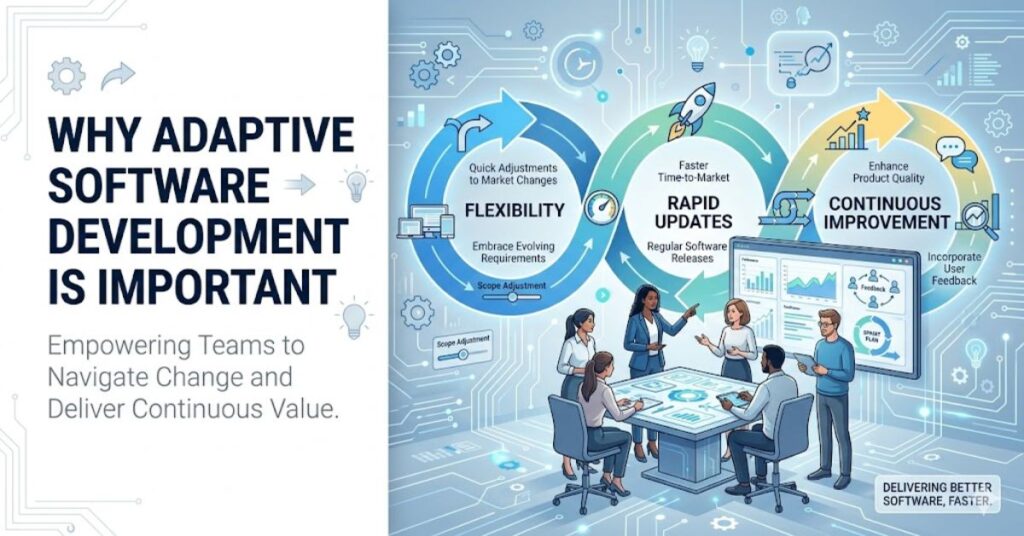
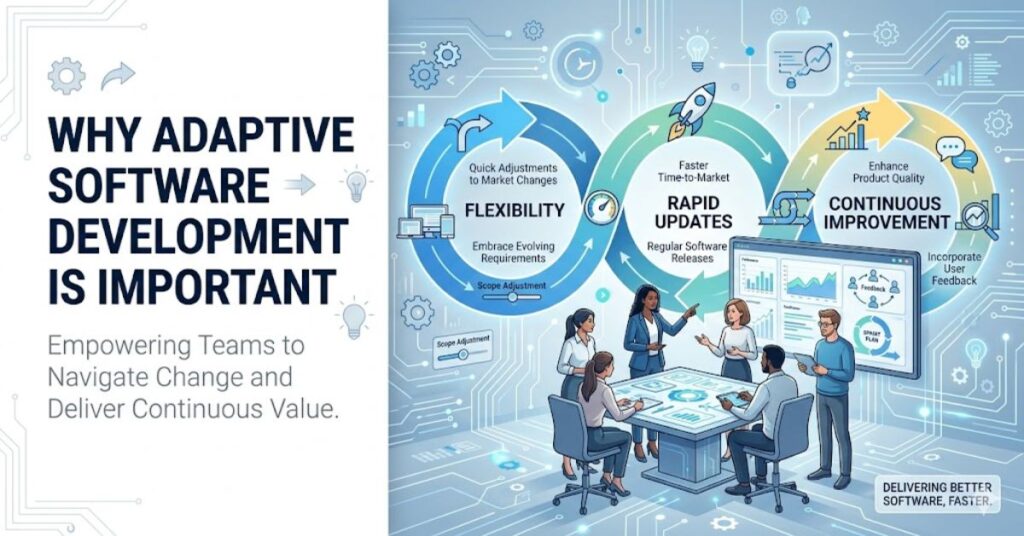
Modern software projects rarely remain unchanged.
Customers request new features. Competitors launch updates. Business goals shift. Traditional methods struggle in these situations.
Adaptive Software Development solves this challenge by helping teams stay flexible.
Instead of spending months creating detailed plans, teams release software in smaller versions and improve after receiving feedback.
Companies that adopt Development often improve speed and customer satisfaction.
Reasons teams choose Adaptive Software
- Faster delivery
- Better communication
- Lower project risk
- Continuous improvement
- Easier change management
- Better customer involvement
For products that evolve quickly, this method often produces stronger results.
Core Principles of Adaptive Software Development
Software Development follows several important principles.
These principles guide every decision during development.
Mission Focused
- Focus on business goals
- Deliver value quickly
- Avoid unnecessary work
Feature Based
- Build useful features first
- Release improvements often
Iterative
- Work in cycles
- Improve after each release
Risk Driven
- Identify risks early
- Reduce uncertainty
Change Tolerant
- Welcome changes
- Adapt continuously
These principles make Adaptive Software suitable for complex environments.
Adaptive Software vs Traditional
Many people compare Adaptive Development with the Waterfall.
Both approaches build software differently.
| Feature | Adaptive Software Development | Waterfall |
| Planning | Flexible | Fixed |
| Changes | Accepted | Limited |
| Feedback | Continuous | Late |
| Releases | Frequent | Final delivery |
| Team Structure | Collaborative | Sequential |
Waterfall works well when requirements remain stable.
Adaptive Software works better when change happens often.
Adaptive Software Development vs Agile
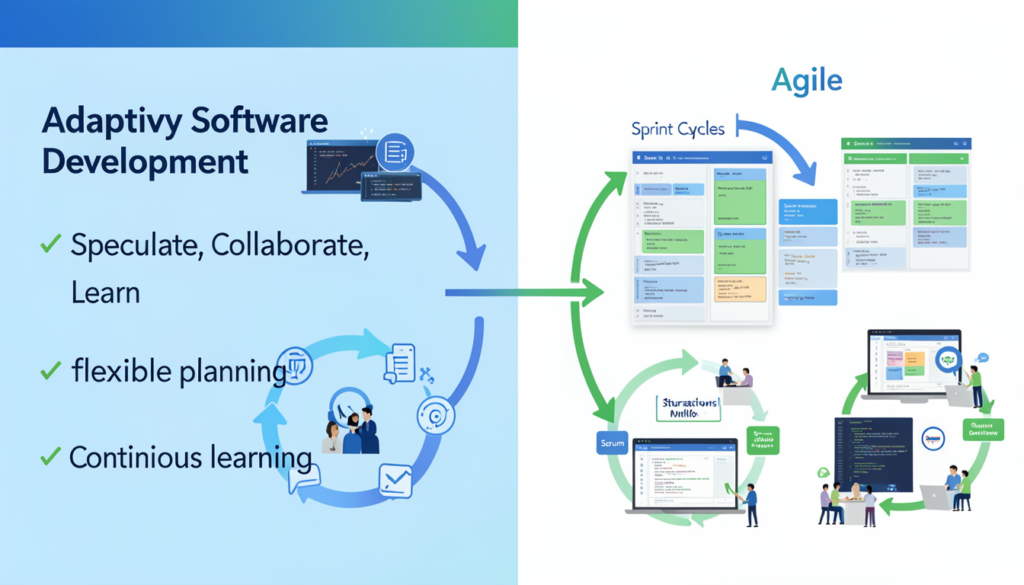
Many people think ASD and Agile are identical.
They share similarities but remain different.
Software Development influenced Agile practices and focuses heavily on learning and adaptation. Agile includes several frameworks, like Scrum and Kanban.
Adaptive Software
- Strong focus on learning
- Flexible planning
- Continuous adaptation
Agile
- Multiple frameworks
- Structured ceremonies
- Sprint-driven execution
Organizations often combine ideas from both approaches.
Benefits of Adaptive Software Development
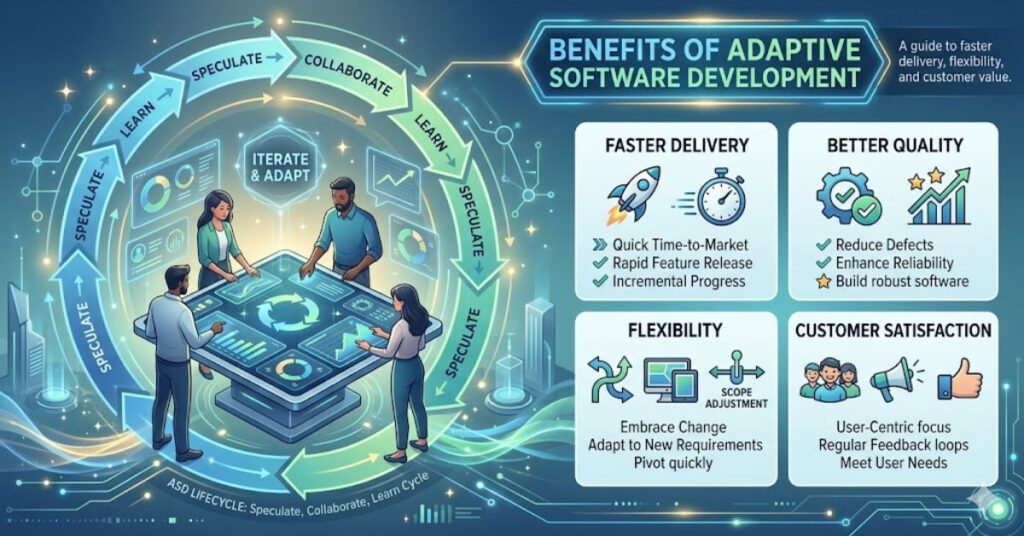
Companies adopt Adaptive Development because it provides practical advantages.
Faster Product Delivery
Short development cycles allow teams to release updates quickly.
Better Product Quality
Continuous testing helps identify problems early.
Improved Customer Satisfaction
Customers influence development throughout the project.
Reduced Project Risk
Teams discover issues before they become expensive.
Strong Team Collaboration
People communicate more and solve problems together.
Higher Flexibility
Teams respond to changing priorities without major disruption.
These benefits make Adaptive Development valuable for modern software teams.
Challenges of Adaptive Software Development
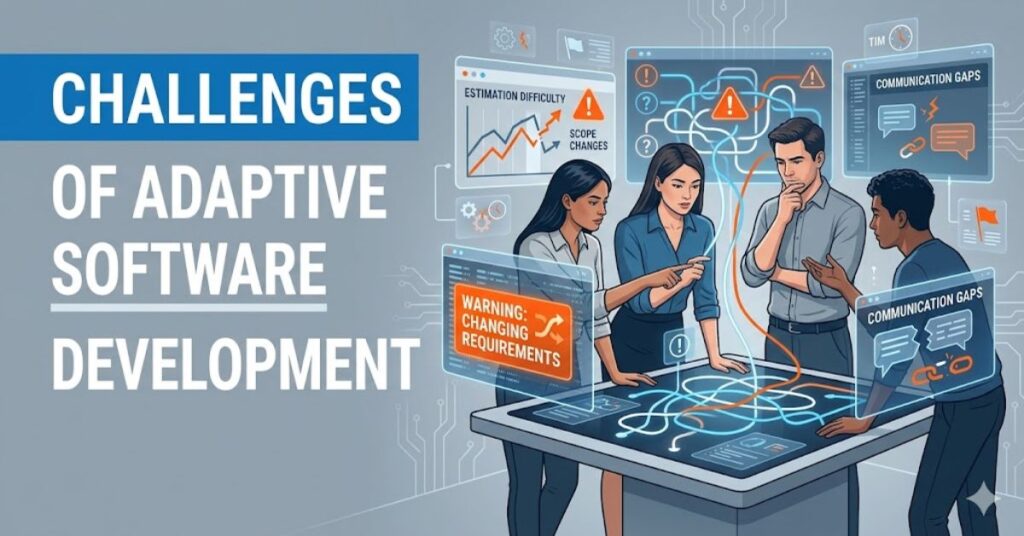
Even strong methods create challenges.
Software Development requires discipline.
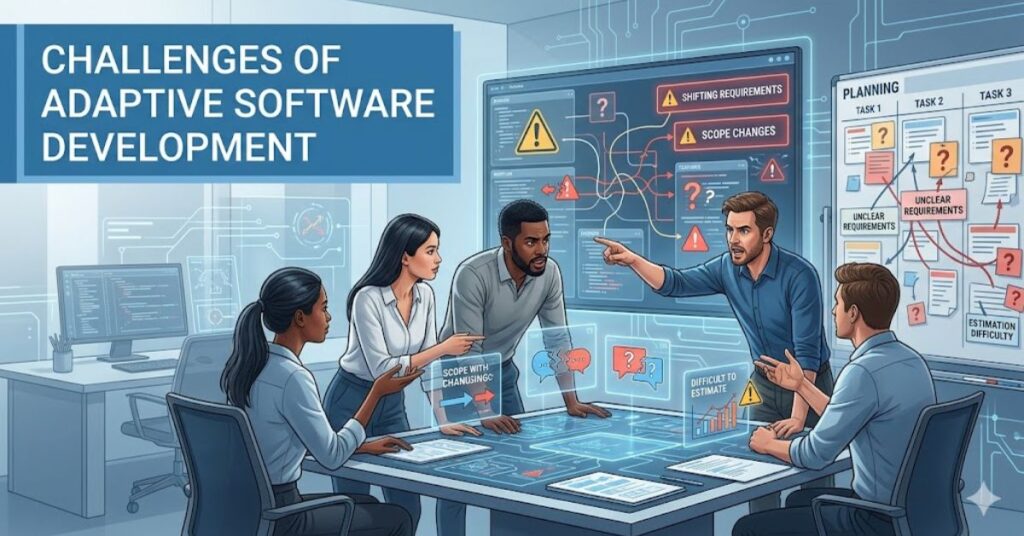
Common challenges
- Frequent changes may create confusion
- Teams must communicate constantly
- Project scope can expand
- Estimation becomes difficult
- Leadership must support flexibility
Teams can reduce these problems through strong planning and clear goals.
Challenges of Adaptive Software Development
Imagine a company developing a ride-sharing app.
one:
In the first month, the team launches a basic booking feature.
two:
During the second month, users request live tracking.
three:
By the third month, customers ask for digital payment options.
four:
In the fourth month, the company adds driver ratings.
Instead of restarting development each time, the team updates priorities and continuously releases improvements.
That example shows how Adaptive Development supports change.
Best Practices for Adaptive Software Development
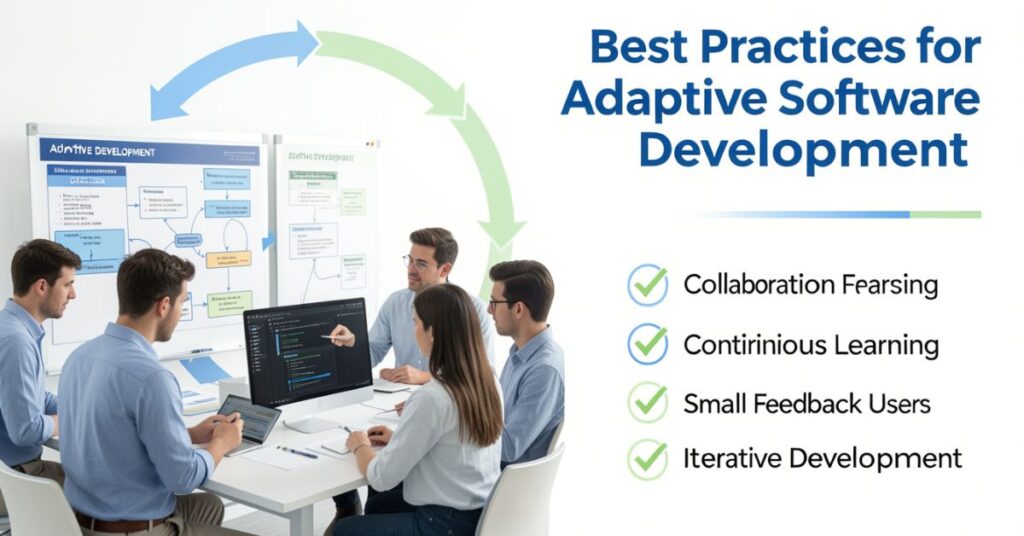
Organizations can improve results by following proven practices.
Build Small Releases
- Deliver quickly
- Collect feedback early
Encourage Collaboration
- Keep communication open
- Include stakeholders
Measure Progress
- Track outcomes
- Improve continuously
Accept Learning
- Review failures
- Apply lessons
Focus on Users
- Prioritize customer needs
These practices increase success rates.
When Should You Use Adaptive Software Development?

Adaptive Software works best when projects change frequently.
Use it when:
Ideal situations
- Startup environments
- SaaS products
- Mobile apps
- Innovation projects
- Fast-moving businesses
- Customer-driven platforms
Avoid it when requirements remain fixed and regulated.
Future of Adaptive Software Development

Software development continues to evolve.
Companies want faster releases and better user experiences.
Software Development supports these goals by combining flexibility, collaboration, and continuous improvement.
As organizations continue adopting Agile and iterative practices, the ideas behind Adaptive Software will remain important. (Trantorinc)
Final Thoughts
Adaptive Software Development shows how modern software teams handle change in a smart and practical way. It replaces strict planning with flexibility, learning, and teamwork. This approach helps teams build better products because they improve them step by step instead of waiting until the end.
Today, most software projects face changing user needs and fast market shifts. Adaptive Software Development supports this reality by encouraging continuous feedback and quick updates. Teams stay connected with users, learn from every release, and adjust their direction when needed.
If you want faster delivery, better product quality, and stronger customer satisfaction, Software Development offers a reliable path. It works best in fast-moving environments where change happens often, and early decisions may not stay final.
In simple words, Adaptive Software Development helps teams build, learn, and improve continuously and that makes it highly effective for modern software
FAQs
1. What is Adaptive Software in simple words?
Software Development is a flexible method that helps teams build software while adjusting to changes during development.
2. Who created Adaptive Development?
Jim Highsmith and Sam Bayer developed Software Development from Rapid Application Development concepts.
elopment Agile?
ASD influenced Agile but remains its own methodology.
4. What are the three phases of Software Development?
Speculate, Collaborate, and Learn.
5. What industries use Adaptive Development?
Software companies, startups, mobile app businesses, and technology teams use ASD.
6. What is the main goal of Adaptive Software?
The goal is to create better software through flexibility, teamwork, and continuous learning.
Internal Links
- Agile Software Development →
https://techcrebia.com/agile-software-development/ - Software Development Life Cycle →
https://techcrebia.com/software-development-life-cycle/ - Software Development Methodologies →
https://techcrebia.com/software-development-methodologies/ - Lean Software Development →
https://techcrebia.com/lean-software-development/ - Scrum Software Development →
https://techcrebia.com/scrum-software-development/
External Links
- Atlassian – Adaptive Software Development → Adaptive Software Development Guide
- TechTarget – Adaptive SDLC → Adaptive SDLC Guide