




Introduction
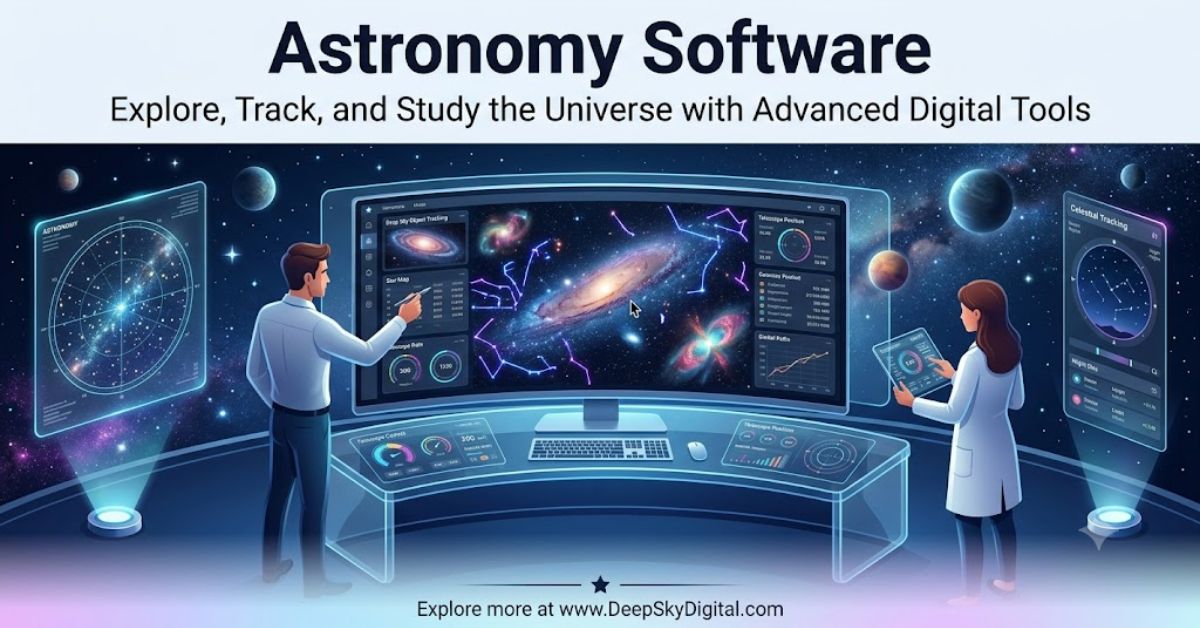
Astronomy software helps people study space, stars, planets, and galaxies using computers. It allows users to explore the universe without needing expensive equipment at every step.
Scientists, students, and hobbyists all use software to study and observe the night sky.
Modern tools simplify space learning. They display real-time sky maps, track satellites, and simulate space events in an interactive way.
Many users also use these tools to plan telescope viewing sessions and better understand how celestial objects move.
This article explains astronomy software in detail. It covers its types, features, benefits, and future trends. You will also learn how it supports both beginners and professionals.
Astronomy Software overview and meaning
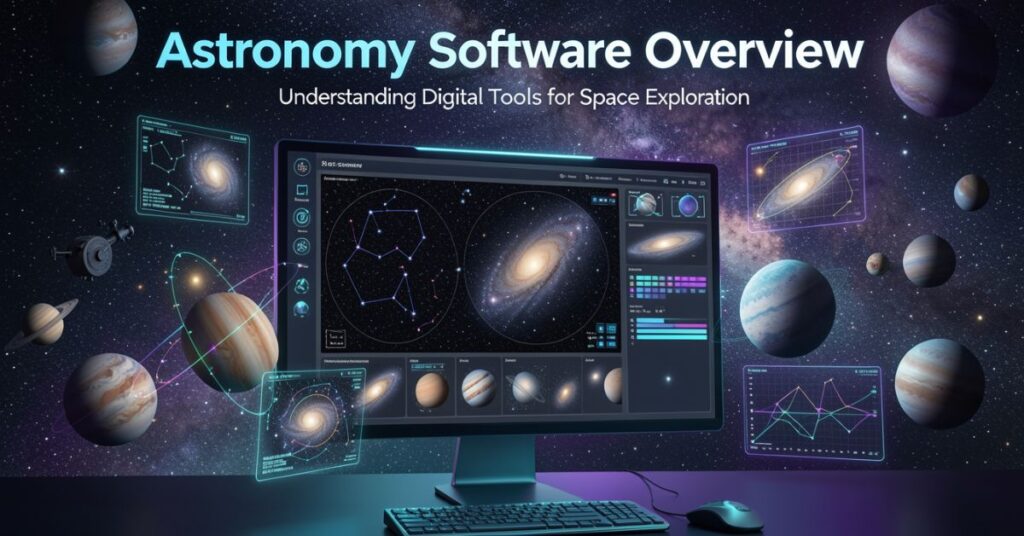
Astronomy software means computer programs that help users study space and celestial objects.
People use astronomy software to view stars, planets, galaxies, and other space objects in digital form. It acts like a virtual telescope.
Astronomy tools give users a realistic view of the night sky. They use data from satellites and space agencies to create accurate sky maps.
Users can explore space from their home using specialized tools.
Educational institutions use these tools to teach astronomy concepts. They make learning interactive and easier to understand.
Teachers use astronomy software to show planetary motion, eclipses, and star patterns.
Amateur astronomers use these tools to identify stars and constellations. They also use them to guide telescope alignment.
Key points about
- Astronomy software simulates real sky conditions
- It helps track planets and stars
- It supports telescope alignment
- It provides space data visualization
- It improves astronomy learning
Astronomy software continues to grow with advanced technology. Today, it includes AI-based predictions and real-time tracking features.
Astronomy software types and categories
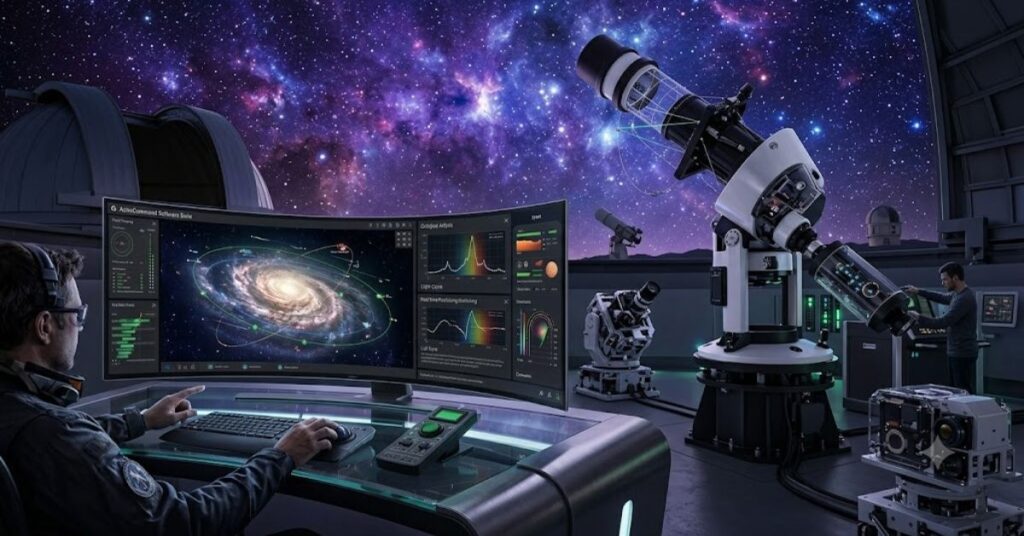
Astronomy software comes in different types based on use. Each type serves a specific purpose. Some focus on education, while others support professional research.
Educational tools help students learn basic space concepts. They show simple models of planets and stars.
Professional tools support research institutions and space scientists.
Simulation tools create virtual space environments. Users can travel through galaxies and observe cosmic events.
Types of astronomy
- Educational
- Professional research
- Telescope control
- Sky mapping
- Simulation
Astronomy comes in different types based on use. Each type serves a specific purpose. Some focus on education, while others support professional research.
Educational tools help students learn basic space concepts. They show simple models of planets and stars.
Professional tools support research institutions and space scientists.
Simulation tools create virtual space environments. Users can travel through galaxies and observe cosmic events..
Astronomy software for beginners using
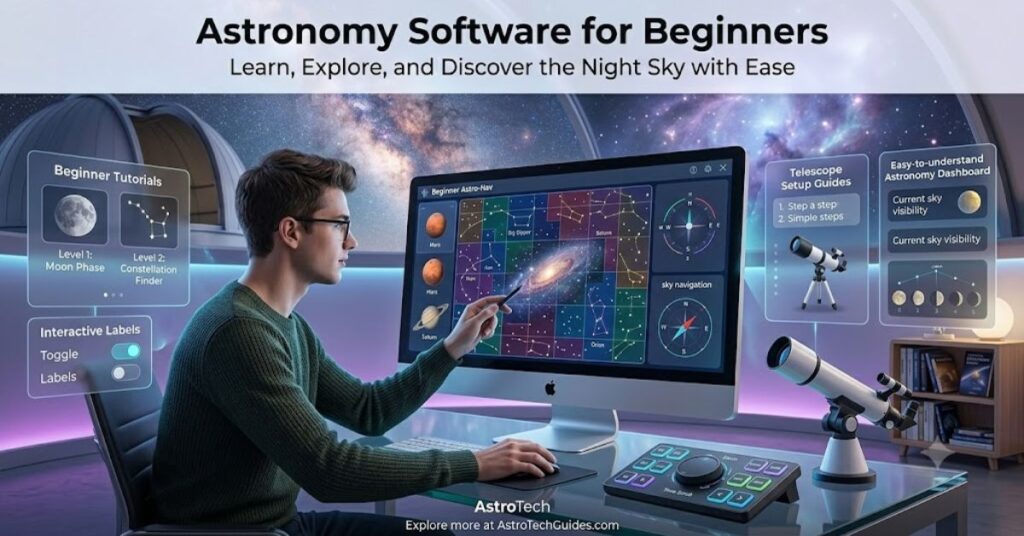
Beginners find these tools very helpful for starting their space journey. They provide simple tools and easy navigation.
Beginners use them to learn constellations, planets, and stars.
Most beginner tools include interactive sky maps. Users can click on stars and get information instantly. This makes them very user-friendly.
Beginners also use them to plan stargazing sessions. They show the best time to observe planets and meteor showers.
Features for beginners
- Easy interface
- Interactive star maps
- Basic space tutorials
- Planet tracking tools
- Mobile compatibility
Astronomy software helps beginners avoid confusion. It breaks complex space science into simple visuals. This improves learning speed and interest in astronomy.
Many schools recommend software for students. It supports visual learning and increases curiosity about space.
Astronomy software for professionals using
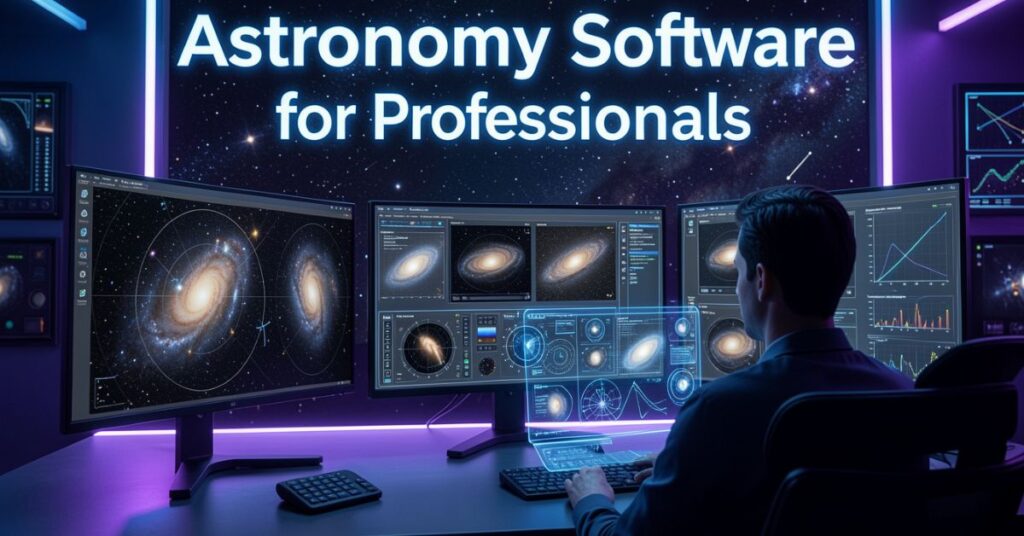
Professional astronomers rely heavily on these tools for research. They use advanced tools to collect and analyze space data.
Professional tools provide high-precision features. They help scientists study galaxy movement, black holes, and cosmic radiation.
Research institutes use these tools to simulate space conditions. This helps in understanding the universe better.
Professional uses
- Deep space analysis
- Telescope data processing
- Space object tracking
- Scientific simulation models
- Research data visualization
Astronomy improves research accuracy. It reduces manual errors and increases speed. Scientists depend on it for space missions and discoveries.
Advanced tools also connect with observatories. They collect real-time data from telescopes around the world.
Astronomy software features and tools
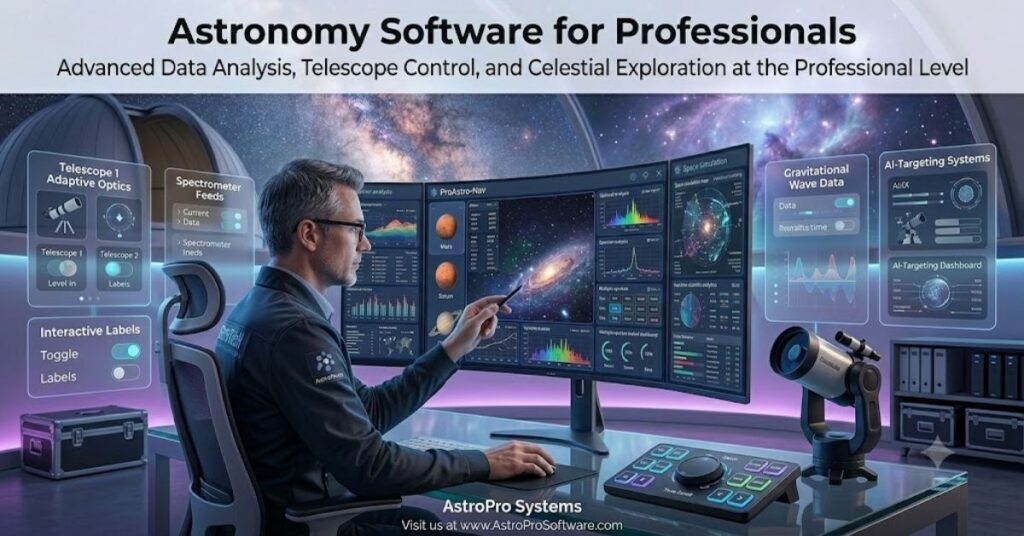
Astronomy software includes many powerful features. These features make space exploration simple and interactive.
Most tools include a sky simulation engine. It shows accurate star positions based on location and time.
They also include telescope control tools. Users can control telescopes directly from the software.
Common features
- Real-time sky simulation
- Telescope integration
- Star catalog database
- Satellite tracking
- Planetarium view mode
Astronomy also provides alerts for space events. It notifies users about eclipses, meteor showers, and planetary alignments.
Many programs support customization. Users can adjust brightness, zoom level, and sky filters.
It improves user experience by combining science and technology.
Astronomy software for telescope control using
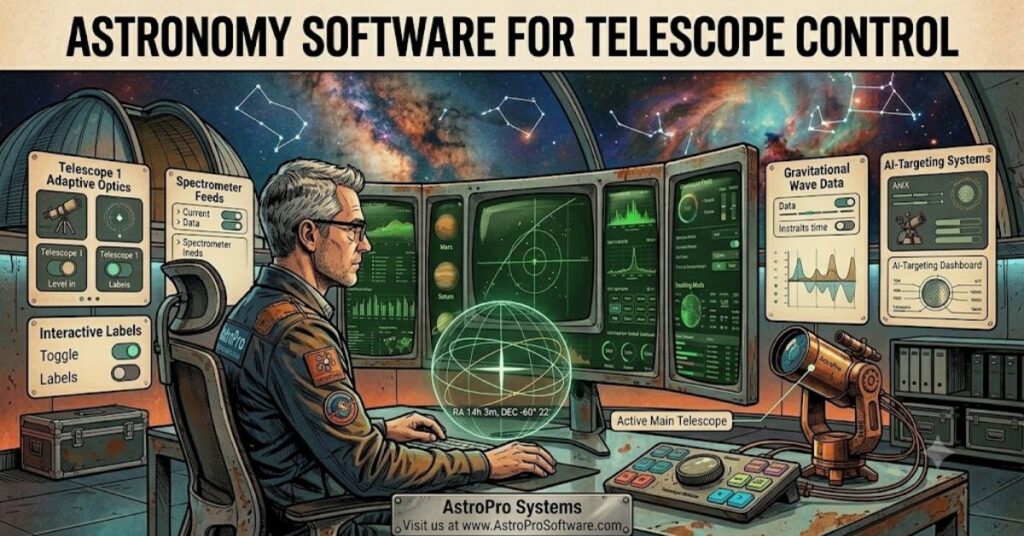
Astronomy tools play an important role in telescope control. They connect digital systems with physical telescopes.
Users can point telescopes using these tools, which reduces manual effort and improves accuracy.
These systems calculate star positions and send commands to telescopes, helping track moving objects in space.
Telescope control functions
- Automatic alignment
- Object tracking
- Remote telescope control
- Focus adjustment
- Coordinate mapping
Astronomy makes telescope usage easy for beginners and professionals. It saves time and increases observation quality.
Observatories use astronomy to control large telescopes remotely. This allows scientists to study space without being physically present.
Astronomy software for sky mapping and star charts using
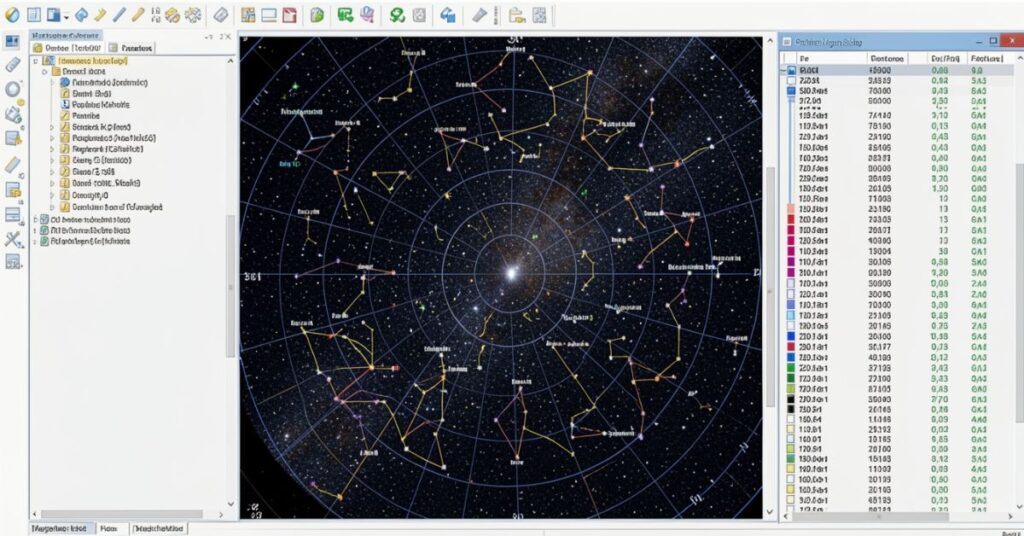
Sky mapping is one of the most important uses of software. It creates digital star maps based on real sky data.
Astronomy shows stars, constellations, and planets in real time. Users can explore the sky by moving their device or mouse.
Star charts in software help users identify celestial objects easily. They provide labels and detailed information.
Sky mapping features
- Real-time star charts
- Constellation guides
- Planet tracking maps
- Zoom-in space views
- Location-based sky display
Astronomy updates sky maps regularly. It uses astronomical databases for accuracy.
Sky mapping in software helps both learners and researchers. It improves navigation in the night sky.
Astronomy for data analysis and research using
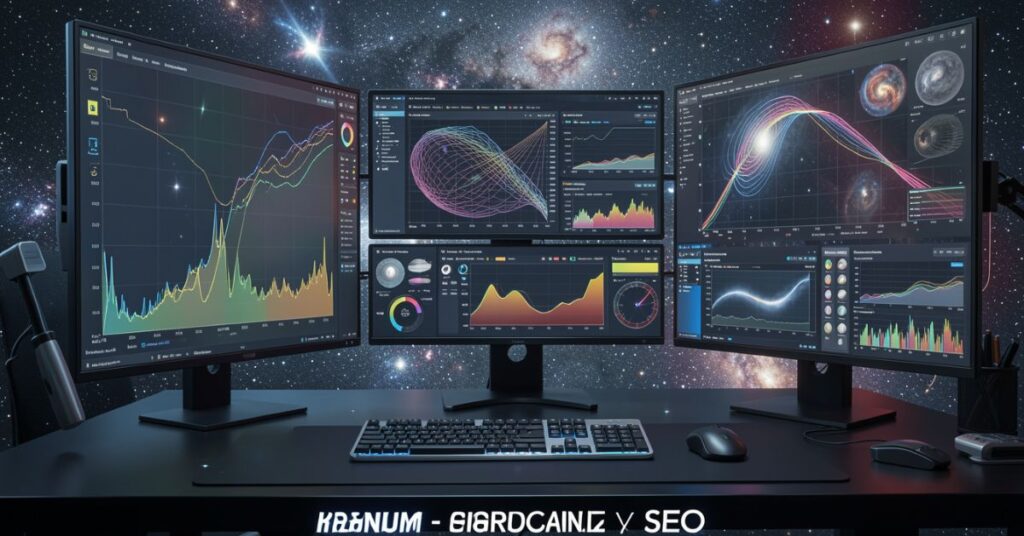
Astronomy tools play a major role in scientific research. Scientists use them to analyze space data.
They process large amounts of information from telescopes and satellites and help identify patterns in space data.
Researchers use them to study star formation and galaxy structure.
Data analysis functions
- Image processing
- Signal analysis
- Space data filtering
- Pattern detection
- Simulation modeling
Astronomy increases research efficiency. It reduces the time needed for data interpretation.
Universities and research labs depend on astronomy for advanced space studies.
Astronomy software comparison table and selection guide
Choosing the right software depends on user needs. Below is a simple comparison.
| Type of Astronomy Software | Best For | Difficulty Level | Key Feature |
| Educational astronomy software | Students | Easy | Learning tools |
| Professional astronomy software | Scientists | Advanced | Research analysis |
| Telescope control astronomy software | Observers | Medium | Telescope sync |
| Sky mapping astronomy software | Hobbyists | Easy | Star charts |
| Simulation astronomy software | Explorers | Medium | Space simulation |
When selecting software should match the user experience level. Beginners should choose simple.
Astronomy software benefits in education using
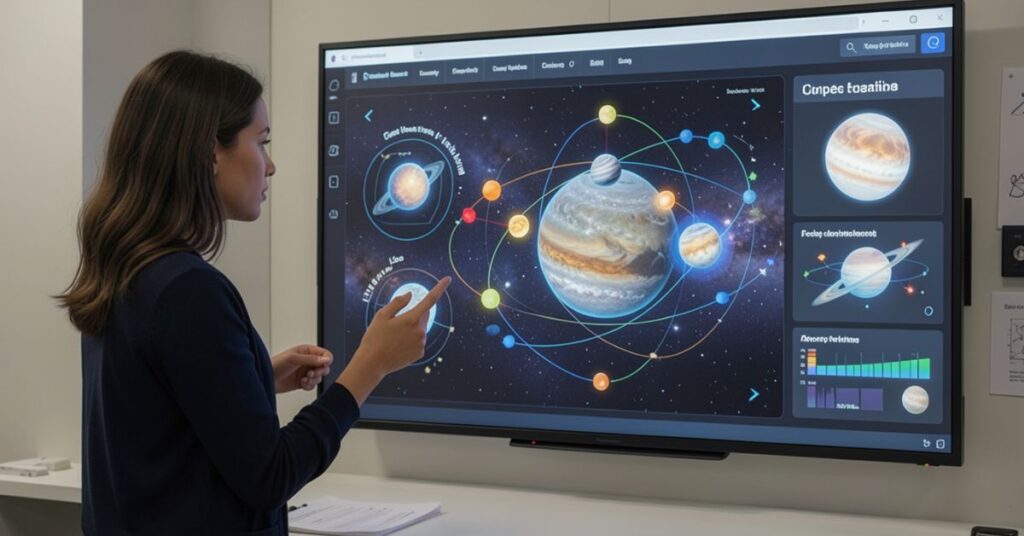
Astronomy software improves education in many ways. It helps teachers explain complex topics easily.
Students understand planets, stars, and galaxies better through software visuals.
Educational benefits
- Improves visual learning
- Increases student interest
- Simplifies complex concepts
- Supports interactive teaching
- Enhances space knowledge
Schools use software in science labs. It helps students explore space without real telescopes.
Astronomyakes learning fun and engaging.
Astronomy software challenges and limitations
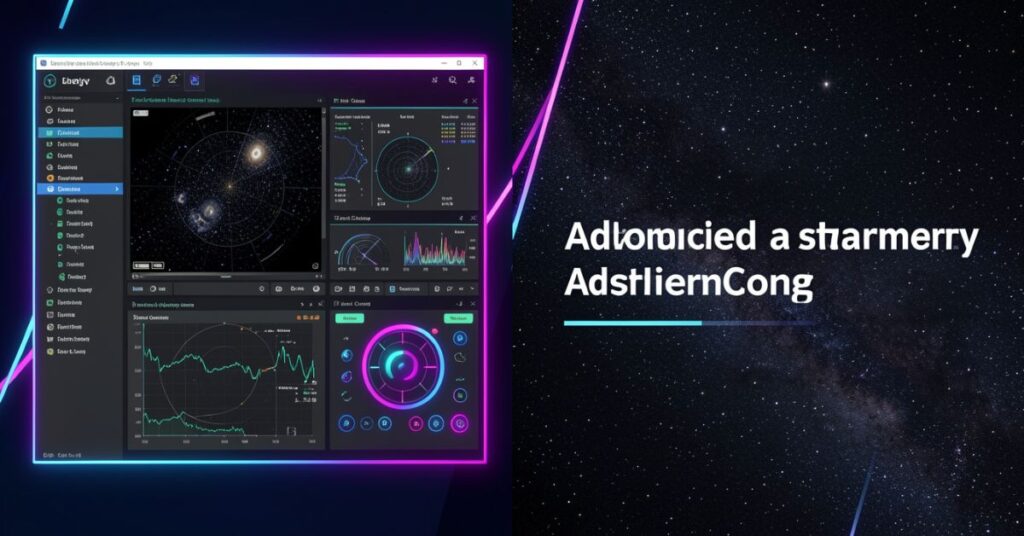
Software also has some limitations. It depends on accurate data and system performance.
Some astronomy requires high-end computers. This can limit accessibility for some users.
Common challenges
- High system requirements
- Data accuracy dependence
- Internet requirement for updates
- Learning curve for advanced tools
- Software cost in premium versions
Despite challenges, astronomy continues to improve. Developers work on making it more accessible.
Future of astronomy software and development
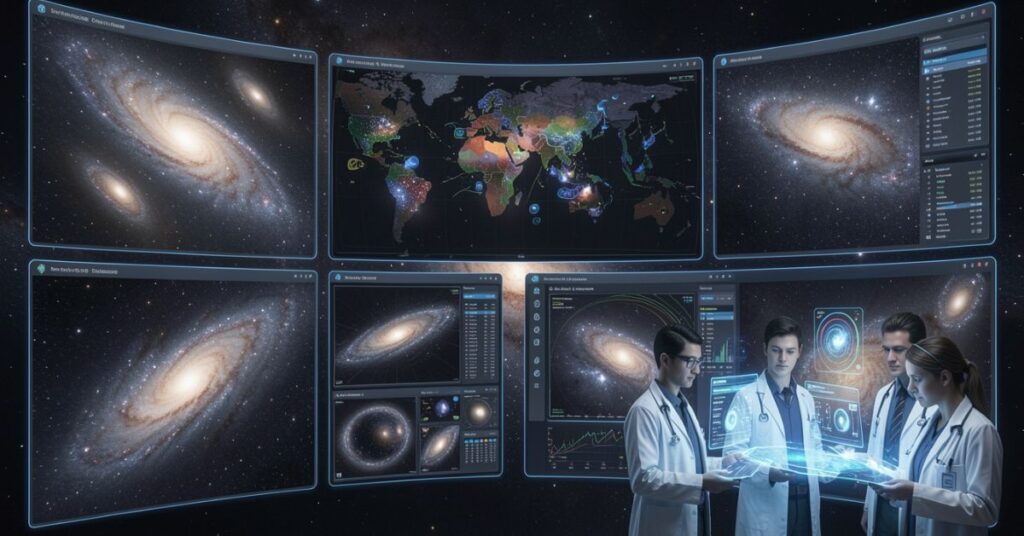
The future of astronomy looks very advanced. Developers integrate AI and machine learning into software.
Future astronomy software will offer more accurate predictions and real-time space exploration.
Future trends
- AI-based space analysis
- Virtual reality sky exploration
- Real-time global telescope networks
- Mobile-first
- Cloud-based data systems
Astronomy will become more interactive and powerful. It will support deeper space exploration and research.
Conclusion
Astronomy tools have changed the way people explore space. They support education, research, and hobby astronomy. Users rely on them for sky mapping, telescope control, and data analysis.
These tools continue to evolve with modern technology. They make space exploration easier and more accessible for everyone..
FAQs
1. What is software?
software helps users study space, stars, planets, and galaxies using digital tools.
2. Who uses software?
Students, teachers, hobbyists, and professional scientists use software.
3. Can beginners use software easily?
Yes, beginners can use simple astronomy with interactive features.
4. Does astronomy work with telescopes?
Yes, manysoftware programs connect with telescopes for control and tracking.
5. Is astronomy software free?
Some astronomy software is free, while advanced versions require payment.
6. What devices support software?
Software works on computers, tablets, and smartphones.
7. Why is astronomy important?
Astronomy makes space learning and research easier, faster, and more accurate.