




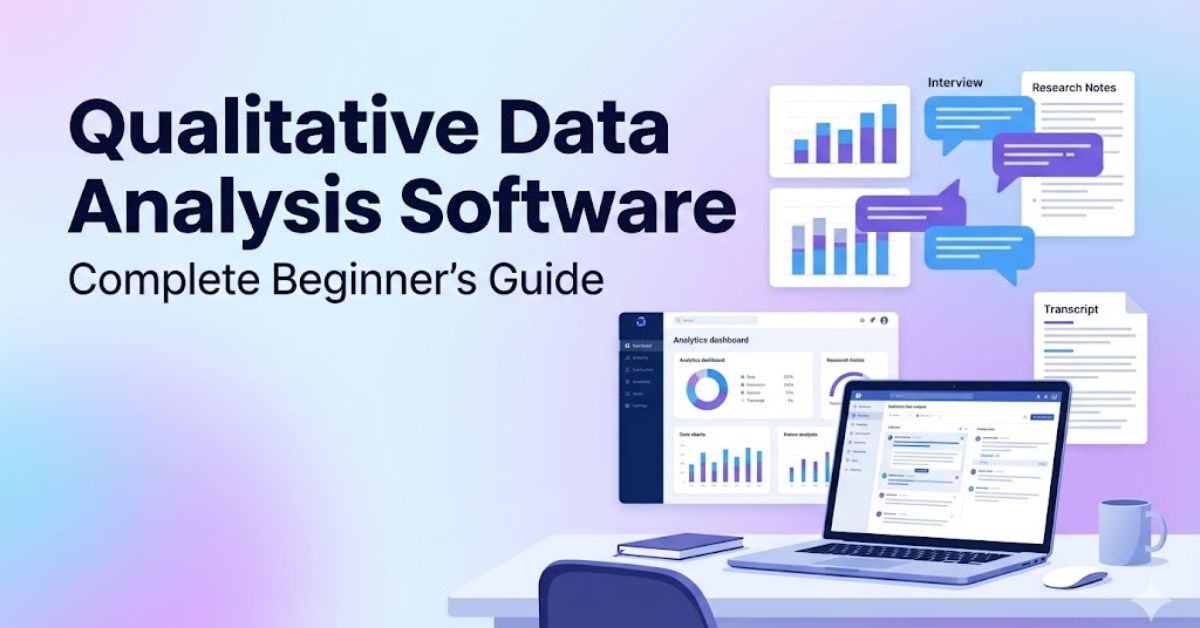
Qualitative data analysis software helps researchers organize, manage, and analyze non-numerical data such as interviews, surveys, focus groups, observations, and customer feedback.
This type of information creates large amounts of text, audio, video, and image data. Managing and analyzing this information manually takes a lot of time.
Qualitative data software helps researchers organize, code, analyze, and visualize qualitative information.
The software reduces manual work and helps researchers identify patterns, themes, and insights more quickly.
Today, universities, businesses, healthcare organizations, government agencies, and market researchers use qualitative data analysis software to improve research quality and speed.
This guide explains everything you need to know about data analysis, including its features, benefits, types, applications, challenges, and the best software solutions available today.
What Is Qualitative Data Analysis Software?
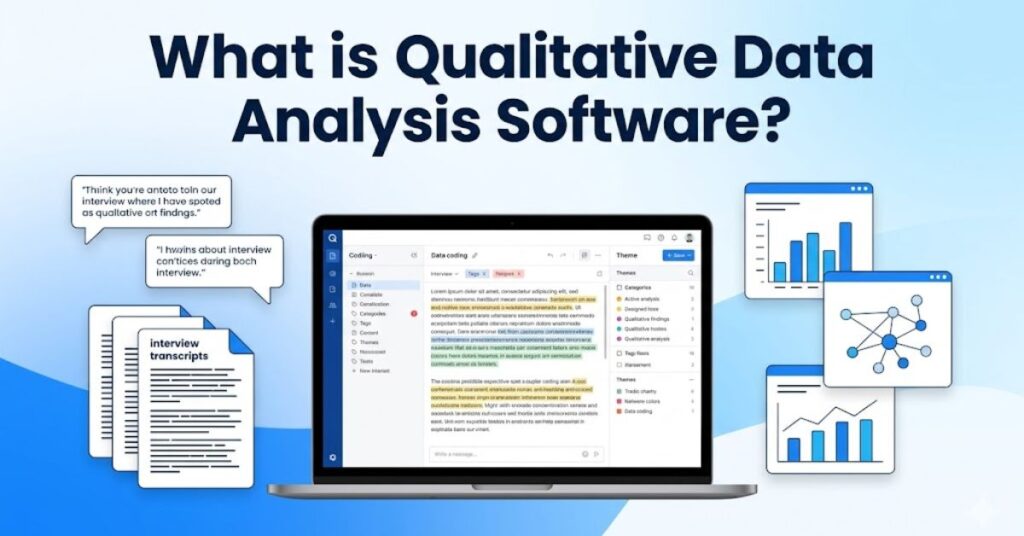
Qualitative data software refers to specialized tools that help researchers manage and analyze non-numerical data.
This data may include interview transcripts, survey responses, focus group discussions, documents, social media content, audio recordings, videos, and images.
Instead of reading hundreds of pages manually, researchers can use software tools to organize information and discover meaningful patterns.
Researchers often work with large datasets. Manual analysis becomes difficult when projects involve hundreds of interviews or thousands of survey responses.
Qualitative analysis software solves this problem by providing tools for coding, categorizing, searching, filtering, and visualizing data.
These tools allow researchers to identify recurring themes and relationships quickly.
Most qualitative data software platforms support thematic, content, grounded theory, narrative analysis, discourse, and mixed-methods research.
Modern platforms also include AI-powered features that assist researchers during coding and theme identification.
However, researchers still make the final decisions about interpretation and conclusions.
Organizations across many industries rely on qualitative data analysis software. Businesses analyze customer feedback to improve products.
Healthcare researchers study patient experiences. Universities conduct academic studies. Government agencies evaluate public opinions and social programs.
These applications make qualitative data analysis software an important research tool.
Main Types of Data Used in Qualitative Data
- Interview transcripts
- Focus group discussions
- Open-ended survey responses
- Customer reviews
- Social media comments
- Research documents
- Audio recordings
- Video recordings
- Images and photographs
- Field notes
- Observation reports
Why Qualitative Data Analysis Software Is Important

Modern research generates large volumes of qualitative information. Researchers need efficient tools to handle this information without losing accuracy.
Data analysis software helps researchers work faster while maintaining consistency throughout the research process.
One major advantage involves organization. Researchers can store all research materials in one location.
They can connect related documents, notes, codes, and themes. This organized approach prevents information from getting lost during large projects.
Another benefit involves coding. Coding allows researchers to label sections of data according to themes or concepts.
Instead of highlighting documents manually, researchers can create structured coding systems within the software. The software then helps retrieve all related content instantly.
Qualitative data software also improves collaboration. Multiple researchers can work on the same project and compare coding decisions.
This collaboration increases reliability and strengthens research findings. Some platforms even support cloud-based teamwork and real-time collaboration.
Visualization tools provide another advantage. Researchers can create charts, code maps, word clouds, networks, and thematic diagrams.
These visualizations help researchers identify trends that may remain hidden in raw text.
As datasets continue to grow, qualitative data software becomes increasingly important for producing accurate and reliable research results.
Benefits of Qualitative Data Analysis
- Saves research time
- Improves organization
- Simplifies coding
- Supports collaboration
- Creates visual reports
- Handles large datasets
- Improves research quality
- Enhances transparency
- Supports multiple data formats
- Reduces manual errors
Key Features of Qualitative Data Analysis Software
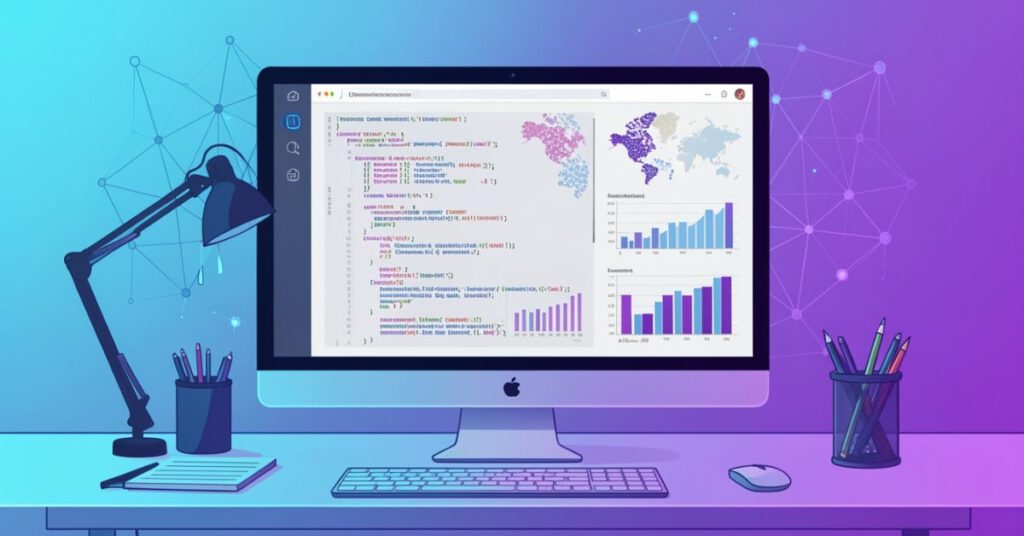
The effectiveness of qualitative data software depends largely on its features. Most leading platforms include a wide range of tools that support every stage of the research process.
Data import features allow researchers to upload documents, PDFs, spreadsheets, audio files, videos, images, and web content. Once imported, researchers can organize files into folders and project structures.
Coding tools represent the core functionality of qualitative data software. Researchers create codes and apply them to relevant sections of text or multimedia files.
The software stores these codes and enables fast retrieval during analysis.
Search and query tools help researchers locate keywords, phrases, codes, and patterns across entire datasets. This capability speeds up analysis and improves consistency. Many platforms also include advanced filtering options.
Visualization features transform complex data into understandable graphics. Word clouds, code frequency charts, network diagrams, and thematic maps help researchers explore relationships among concepts.
Many modern platforms now include artificial intelligence. AI tools suggest codes, summarize data, identify patterns, and accelerate analysis. These tools assist researchers but do not replace human interpretation.
Essential Features in Qualitative Data Analysis
- Data coding
- Text analysis
- AI-assisted coding
- Data visualization
- Search functions
- Team collaboration
- Reporting tools
- Annotation tools
- Multimedia analysis
- Mixed-methods support
- Theme identification
- Data organization
Best Qualitative Data Analysis Software Available Today
Researchers can choose from many qualitative data software options. Each platform offers unique strengths and features. Selecting the right software depends on project size, budget, and research goals.
| Software | Best For | Key Strength |
| NVivo | Academic research | Advanced coding |
| ATLAS.ti | Multimedia analysis | Visual networks |
| MAXQDA | Mixed-methods research | User-friendly interface |
| Dedoose | Team collaboration | Cloud-based analysis |
| QuirkosZ | Beginners | Simple learning curve |
| QDA Miner | Content analysis | Strong analytics |
| Taguette | Small projects | Free and open-source |
Several researchers consider NVivo, ATLAS.ti, and MAX ZQDA among the leading data analysis software solutions because they support advanced coding, multimedia analysis, visualization, and large datasets.
ATLAS.ti supports text, images, videos, audio, surveys, and social media data. It also offers AI coding and powerful visualization tools.
MAXQDA provides extensive support for qualitative and mixed-methods research. Researchers appreciate its user-friendly interface and visualization features.
Quirkos focuses on simplicity and helps new researchers learn qualitative analysis quickly.
Factors to Consider When Choosing Software
- Research goals
- Budget
- Team size
- Data volume
- Learning curve
- AI capabilities
- Reporting needs
- Collaboration features
- Technical support
- Platform compatibility
How Qualitative Data Analysis Software Improves Research Quality
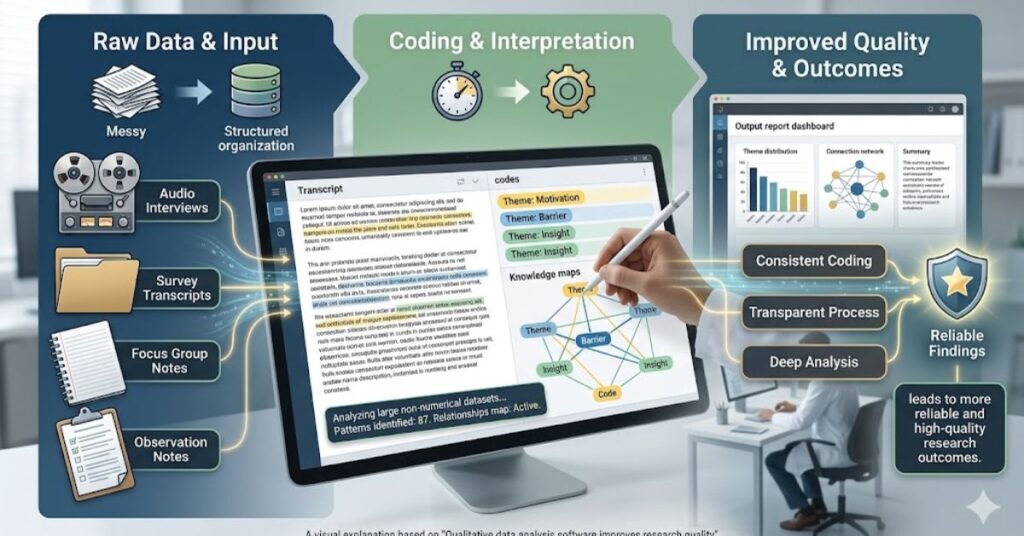
Research quality depends on consistency, transparency, and reliability. Qualitative analysis software supports all three areas by providing structured workflows and documentation features.
Researchers often need to justify how they reached their conclusions. Qualitative data software records coding decisions, memos, annotations, and project changes.
This documentation creates an audit trail that improves research transparency.
The software also improves consistency. Researchers can develop codebooks and apply codes systematically across datasets.
Team members can review coding decisions and discuss disagreements. This process strengthens reliability and reduces bias.
Qualitative data software helps researchers analyze large datasets without overlooking important details.
Search functions and coding queries make it easier to locate supporting evidence for themes and findings. Researchers can verify conclusions using multiple data sources.
Visualization tools further improve quality by revealing hidden relationships. Researchers often discover new patterns when they view data through code maps, networks, or charts.
These insights can strengthen research findings and lead to more meaningful conclusions.
As research becomes more complex, qualitative data software plays an essential role in maintaining high standards and producing trustworthy results.
Ways Software Improves Research
- Creates audit trails
- Supports consistent coding
- Reduces data loss
- Increases transparency
- Enhances collaboration
- Improves reliability
- Speeds up analysis
- Strengthens findings
Applications of Qualitative Data Analysis Software
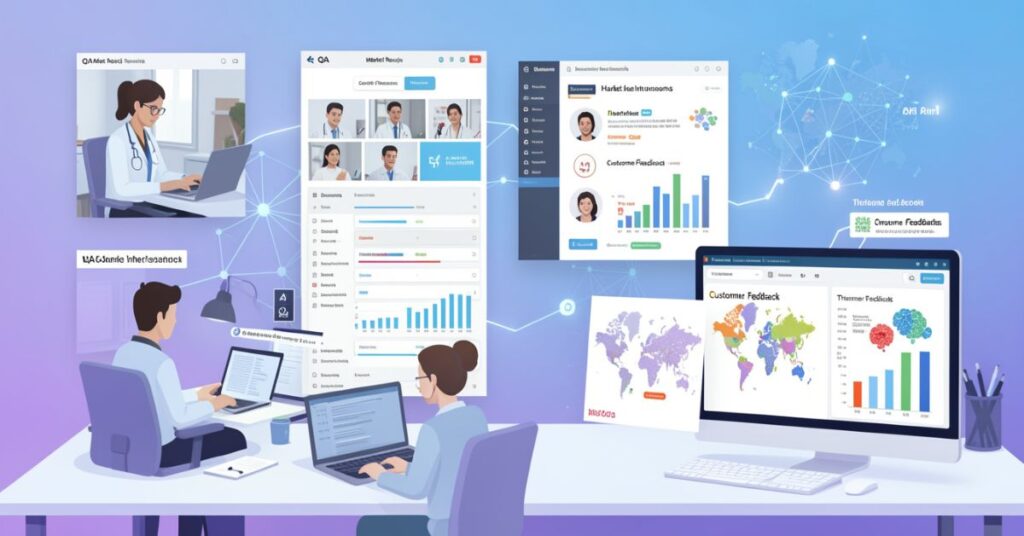
Many industries use qualitative data analysis software to gain deeper insights into human experiences, opinions, and behaviors. The software supports a wide range of research activities.
Academic researchers use qualitative data software for dissertations, theses, journal articles, and research projects.
Universities often teach students how to use these tools because they support rigorous research methods.
Businesses analyze customer reviews, interviews, and feedback to improve products and services. Marketing teams use qualitative
analysis software to understand customer needs and market trends.
Healthcare organizations examine patient experiences and healthcare outcomes. Researchers use qualitative analysis to improve treatments and healthcare policies.
Government agencies use qualitative data analysis to evaluate public programs and understand community concerns. Nonprofit organizations also rely on these tools to measure program effectiveness and community impact.
User experience researchers analyze interviews, usability tests, and customer journeys. The software helps them identify pain points and opportunities for improvement.
Industries That Use Qualitative Data
- Education
- Healthcare
- Marketing
- Government
- Social sciences
- Business research
- User experience research
- Nonprofit organizations
- Human resources
- Public policy
Future of Qualitative Data Analysis
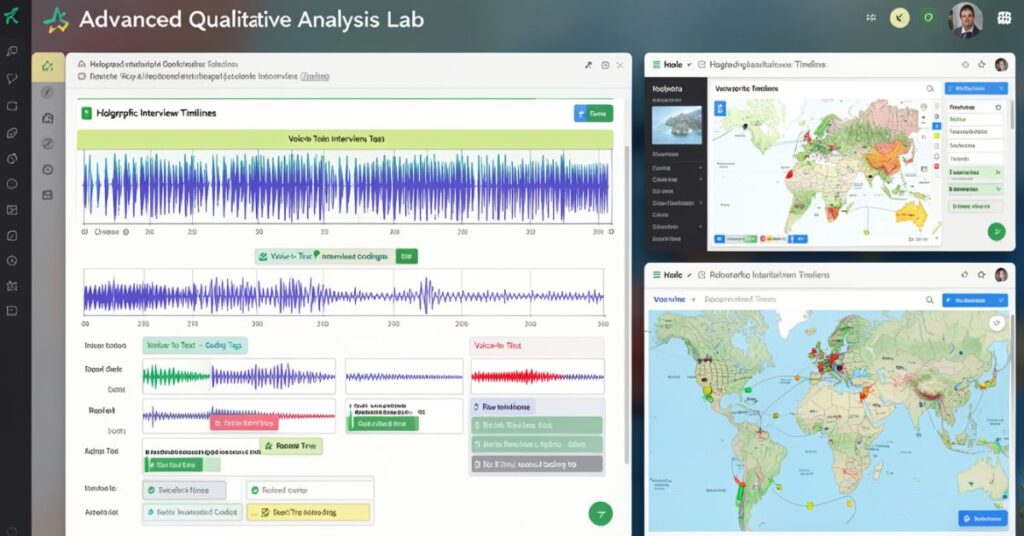
The future of qualitative data software looks promising. Artificial intelligence continues to transform how researchers analyze qualitative information.
Modern platforms already offer AI coding, theme suggestions, summarization, and automated insights. These features help researchers process larger datasets more efficiently. (ATLAS.ti)
Cloud technology also continues to expand. Researchers increasingly work remotely and collaborate across different countries.
Cloud-based qualitative data analysi allows teams to access projects from any location and work together in real time.
Integration with survey platforms, social media tools, and business intelligence systems will likely increase. Researchers will gain access to richer datasets and more advanced analysis capabilities.
Despite technological advances, human interpretation will remain essential. Software can identify patterns, but researchers must still understand context, meaning, and human experiences. The future will likely combine AI-powered automation with expert human judgment.
Organizations that adopt modern qualitative data analysis will gain faster insights, stronger research findings, and better decision-making capabilities.
Emerging Trends in Qualitative Data
- AI-assisted coding
- Automated summaries
- Cloud collaboration
- Real-time teamwork
- Advanced visualizations
- Mixed-methods integration
- Multimedia analysis
- Machine learning support
- Cross-platform access
- Smart reporting tools
Conclusion
Qualitative data software has become an essential tool for modern research. It helps researchers organize information, code data, identify themes, create visualizations, and produce reliable findings.
Businesses, universities, healthcare organizations, and government agencies all benefit from these powerful tools.
As datasets continue to grow, researchers need efficient solutions that reduce manual work and improve accuracy.
Leading platforms such as NVivo, ATLAS. ti, MAXQDA, Dedoose, and Quirkos provide powerful features that support qualitative research from start to finish.
By choosing the right qualitative data software, researchers can save time, improve research quality, and uncover deeper insights from their data.
(FAQs)
What is qualitative data analysis software?
Qualitative data analysis software helps researchers organize, code, analyze, and visualize non-numerical data such as interviews, surveys, videos, and documents.
Which qualitative data analysis software is best?
Many researchers prefer NVivo, ATLAS.ti, and MAXQDA because they offer advanced coding, visualization, and collaboration features.
Can qualitative data analysis software analyze videos and audio files?
Yes. Most modern qualitative data analysis software platforms support text, audio, video, images, and social media content.
Is qualitative data analysis software suitable for students?
Yes. Students use qualitative data analysis software for dissertations, theses, assignments, and academic research projects.
Does qualitative data analysis software use AI?
Many modern platforms include AI-powered coding, theme suggestions, summaries, and pattern recognition tools.
Can businesses use qualitative data analysis software?
Yes. Businesses use qualitative data analysis software to analyze customer feedback, market research, employee surveys, and user experience data.
Is qualitative data analysis software difficult to learn?
Some tools have advanced features and require training. However, beginner-friendly options such as Quirkos offer a simpler learning experience.