





Introduction
AI automation software changes how businesses work. Companies now use smart tools to complete tasks faster and with better accuracy. These tools reduce manual work and help teams focus on important business goals. Many industries now depend on AI automation software for daily operations.
AI automation software combines artificial intelligence with systems. The software learns from data, understands patterns, and performs tasks automatically. Businesses use it for customer support, marketing, data entry, sales, finance, healthcare, and many other operations.
Modern companies want faster results and lower costs. AI automation software gives both benefits together. It improves productivity and reduces human errors. Small businesses and large companies both use these tools to improve performance.
Recent industry reports show that businesses are now moving from simple automation to advanced AI agents that can complete complex workflows with little human support. Companies use AI automation to manage customer service, supply chains, finance, and development.
This guide explains everything about AI automation software. You will learn its features, benefits, types, use cases, challenges, future trends, and best tools available today.
What Is AI Automation Software
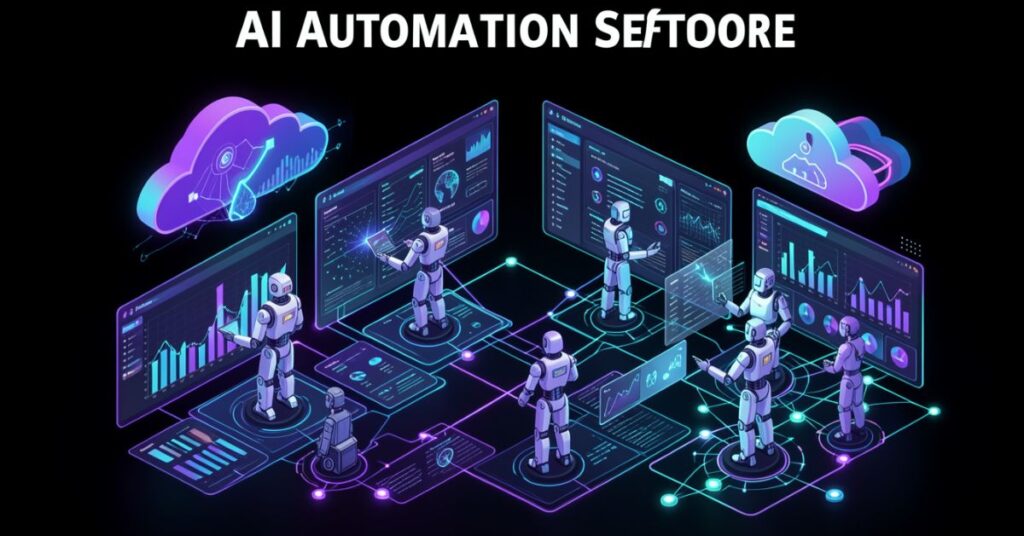
AI automation software uses artificial intelligence to automate tasks and business processes. Traditional automation follows fixed rules. AI automation software can learn, adapt, and improve over time.
Businesses use AI automation software to reduce repetitive work. The software can analyze data, answer customer questions, create reports, manage workflows, and make smart decisions.
Many companies now use AI automation software because it improves speed and efficiency. Employees save time because the software handles repetitive tasks automatically.
AI automation software works with technologies like:
Types of Technologies Used
- Machine learning
- Natural language processing
- Predictive analytics
- Robotic process automation
- Computer vision
- AI chatbots
- Data analytics
- Intelligent workflows
Traditional automation systems only follow instructions. AI automation software understands patterns and adjusts based on data.
For example, traditional software may send emails at fixed times. AI automation software can study customer behavior and send emails when users are most active.
Businesses across healthcare, finance, education, manufacturing, retail, and logistics now depend on AI software for daily operations.
The software helps companies:
Major Goals
- Save time
- Reduce costs
- Improve accuracy
- Increase productivity
- Improve customer support
- Speed up business operations
- Reduce human errors
- Improve decision-making
The growth of AI automation software continues every year. Modern AI systems now complete multi-step workflows without constant human guidance. Many experts call this new phase “agentic AI automation.”
AI Automation Software Features That Improve Business Work

AI automation software offers many powerful features for businesses. These features help companies automate workflows, improve communication, and increase efficiency.
Different software platforms provide different tools. However, most AI automation software systems include common features that support daily business operations.
Businesses choose software based on their goals. Some companies need customer service automation. Others want marketing automation or workflow management.
The right AI automation can improve almost every department inside a company.
Important AI Features
- Workflow automation
- AI-powered chatbots
- Predictive analytics
- Real-time reporting
- Smart scheduling
- Task automation
- Voice recognition
- Data analysis
- Document processing
- CRM integration
- Email automation
- AI recommendations
- Customer behavior tracking
- Machine learning support
- Multi-platform integration
Many modern AI automation Tasks data, and execute actions automatically. Businesses use these systems to manage customer support, sales, and operational workflows.
The software also improves communication between departments. Teams can track tasks in real time and manage projects more effectively.
The following table explains major features and their benefits.
| AI Automation Software Feature | Main Benefit |
| Workflow Automation | Reduces manual work |
| AI Chatbots | Improves customer support |
| Predictive Analytics | Helps decision-making |
| Document Automation | Saves processing time |
| CRM Integration | Improves customer management |
| Smart Scheduling | Organizes tasks better |
| AI Reporting | Creates faster reports |
| Email Automation | Improves communication |
Businesses that use advanced AI automation often experience faster operations and better productivity.
Benefits of AI Automation Software for Modern Businesses
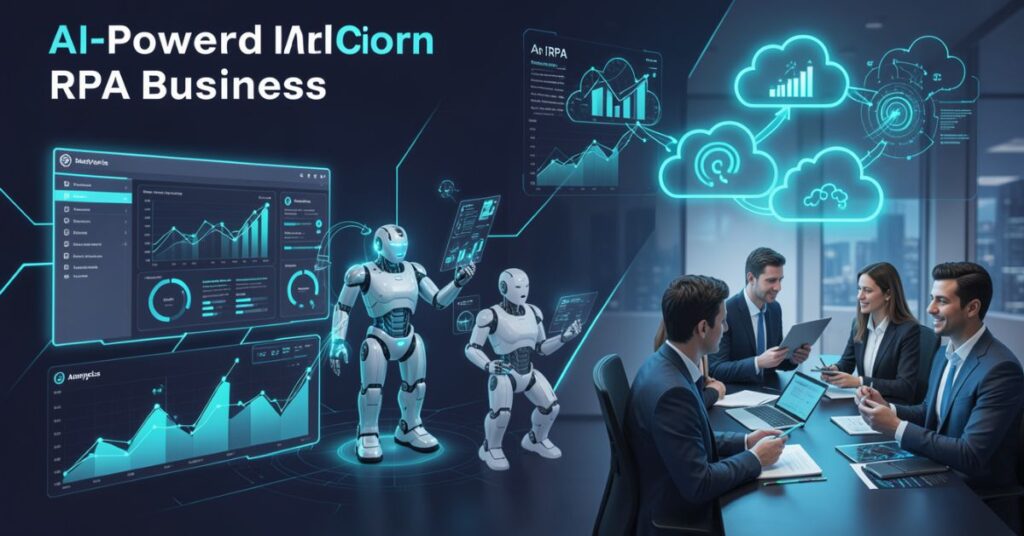
AI automation software provides many benefits for businesses of all sizes. Companies use these tools to improve efficiency, reduce costs, and increase profits.
Modern businesses face strong competition. Companies need faster systems and smarter workflows. AI automation software helps businesses stay competitive in fast-moving markets.
One major advantage is time savings. Employees spend many hours on repetitive tasks. AI handles those tasks automatically.
The software also reduces mistakes. Human workers may enter incorrect data or forget tasks. AI systems perform work with higher accuracy.
Businesses also improve customer service with AI automation software. AI chatbots answer customer questions 24 hours a day.
Main Benefits
- Reduces manual work
- Saves business costs
- Improves customer service
- Increases productivity
- Improves workflow speed
- Reduces human errors
- Supports business growth
- Improves team collaboration
- Provides better data insights
- Helps with faster decision-making
- Improves employee efficiency
- Supports remote work systems
Many companies now use AI automation software for finance, HR, sales, and marketing. Businesses automate invoicing, employee onboarding, lead management, and customer communication.
Recent research shows companies now focus on AI systems that improve resilience, adaptability, and long-term business value instead of only simple efficiency gains.
AI automation software also helps small businesses compete with larger companies. Small teams can complete more work with fewer employees.
The software creates better customer experiences. Customers receive faster responses and personalized support.
The following table explains how AI automation improves different business areas.
| Business Area | Improvement From AI Automation Software |
| Customer Support | Faster response times |
| Marketing | Better audience targeting |
| Finance | Faster invoice processing |
| HR | Easier recruitment management |
| Sales | Better lead tracking |
| Operations | Improved workflow speed |
| Manufacturing | Reduced downtime |
| Healthcare | Faster patient management |
Businesses that use AI automation correctly often increase efficiency and reduce operational costs.
Types of AI Automation Software Used in Different Industries
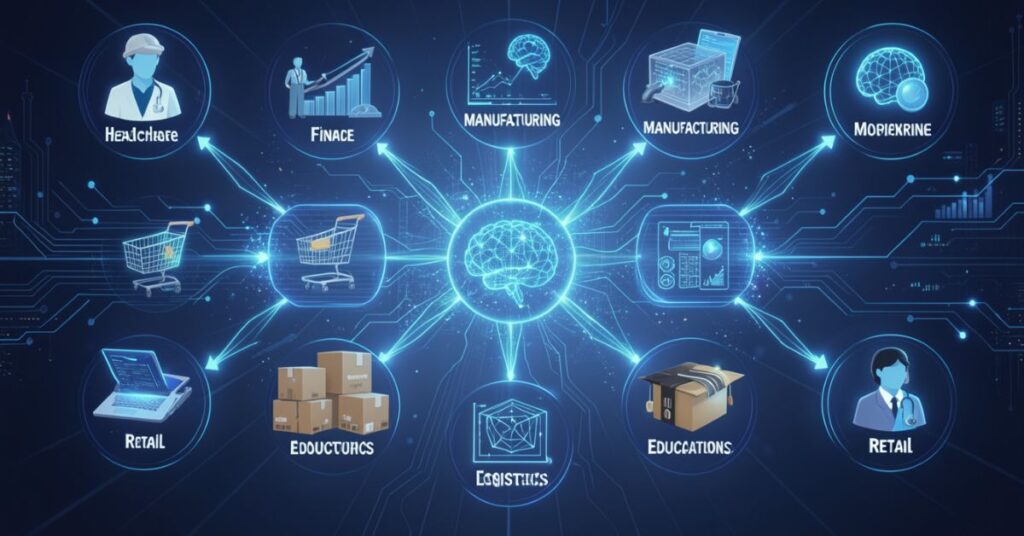
Different industries use different types of AI automation software. Businesses select software based on their goals, workflows, and industry requirements.
Some software focuses on workflow automation. Other tools focus on customer support, data analysis, or marketing.
AI automation now supports industries like healthcare, education, finance, logistics, retail, manufacturing, and development.
Every type of AI software solves different business problems.
Common Types of AI Software
- Robotic process automation software
- AI chatbot software
- Marketing automation software
- CRM automation software
- HR automation software
- Accounting automation software
- Customer service automation software
- Workflow management software
- Data analytics automation software
- Supply chain automation software
- Manufacturing automation software
- Email automation software
Robotic process automation software handles repetitive tasks like data entry and form processing.
AI chatbot software manages customer communication. Businesses use chatbots on websites, mobile apps, and social media.
Marketing automation software helps businesses manage campaigns, emails, social media, and customer engagement.
CRM automation software improves customer relationship management. Sales teams use it to track leads and manage customers.
The manufacturing industry now uses AI automation for predictive maintenance, supply chain management, and smart factory operations. Research reports show manufacturers continue increasing investments in AI-driven automation systems.
The following table explains common AI software categories.
| Type of AI Automation Software | Main Use |
| RPA Software | Repetitive task automation |
| AI Chatbots | Customer communication |
| Marketing Automation | Campaign management |
| CRM Automation | Customer management |
| HR Automation | Employee management |
| Accounting Automation | Financial operations |
| Workflow Automation | Process management |
| Supply Chain Automation | Logistics management |
Businesses often combine multiple AI automation tools to build complete systems.
AI Automation Software in Customer Service Operations
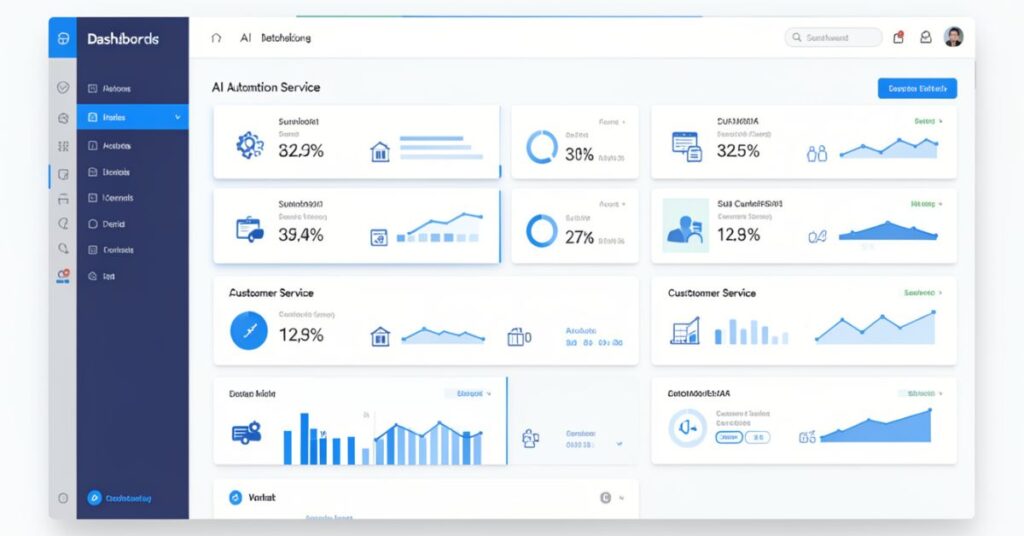
Customer service has changed rapidly because of AI automation software. Businesses now use AI tools to answer customer questions, solve problems, and improve support quality.
Customers expect fast responses. AI automation helps businesses provide support at any time.
AI chatbots remain one of the most popular customer service tools. These chatbots answer common questions and guide customers through different processes.
Businesses also use AI software for:
Customer Service Tasks Managed
- Live chat support
- Ticket management
- FAQ automation
- Customer feedback analysis
- Voice support systems
- Social media responses
- Complaint management
- Customer tracking
- Personalized recommendations
AI software improves customer satisfaction because customers receive faster responses.
Companies also reduce customer service costs. One AI chatbot can handle thousands of conversations daily.
Modern AI systems understand natural language better than older chatbots. Many AI tools now recognize emotions, customer intent, and conversation patterns.
Businesses can also analyze customer data with AI software. Companies study customer behavior and improve products or services.
Recent AI trends show businesses moving from simple chatbot systems to advanced AI agents that complete tasks automatically and manage customer workflows with little human involvement.
The following table explains how AI software improves customer support.
| Customer Service Function | Benefit of AI Automation Software |
| Live Chat | Faster customer responses |
| Ticket Handling | Better organization |
| FAQ Automation | Reduced support workload |
| Voice Support | 24/7 customer assistance |
| Customer Analytics | Better customer insights |
| Complaint Management | Faster issue resolution |
Businesses that improve customer service with AI automation often build stronger customer relationships.
AI Automation for Marketing and Sales Growth
Marketing and sales teams now depend heavily on AI automation. Businesses use automation tools to manage campaigns, track customer behavior, and increase sales.
Traditional marketing required large teams and many manual tasks. AI automation now handles many marketing activities automatically.
Businesses use AI software to send emails, manage social media, analyze customer behavior, and create personalized campaigns.
Sales teams also use AI software to manage leads and customer communication.
Marketing and Sales Tasks Automated
- Email marketing
- Social media scheduling
- Lead tracking
- Customer segmentation
- Campaign reporting
- Product recommendations
- Customer targeting
- Sales forecasting
- Content suggestions
- CRM updates
AI automation studies customer behavior and predicts customer interests. Businesses then create personalized campaigns.
The software also improves lead management. Sales teams focus on high-quality leads instead of wasting time on unqualified prospects.
AI tools also improve advertising performance. Businesses analyze campaign data and optimize ads automatically.
Modern AI software can also update CRM systems automatically, qualify leads, and manage customer communication workflows. Industry experts now describe these systems as intelligent sales agents.
The following table explains marketing improvements from AI software.
| Marketing Activity | Improvement From AI Automation Software |
| Email Campaigns | Better engagement |
| Lead Tracking | Faster sales follow-up |
| Social Media | Improved scheduling |
| Customer Analysis | Better targeting |
| CRM Management | Better organization |
| Campaign Reporting | Faster insights |
Businesses that use AI automation for marketing often improve conversion rates and customer engagement.
AI Automation in the Healthcare Industry
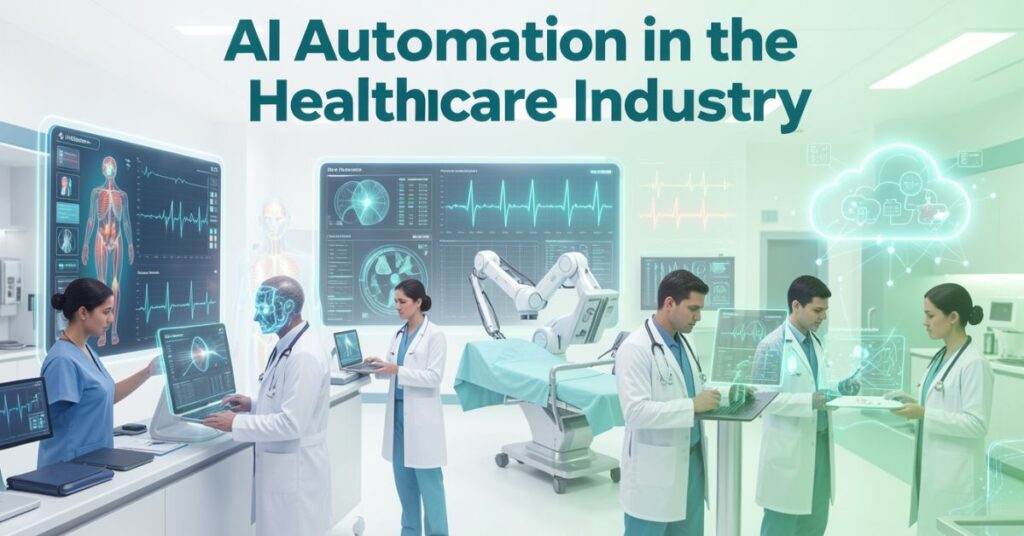
The healthcare industry now uses AI software to improve patient care, reduce workload, and manage medical operations.
Hospitals and clinics handle large amounts of data every day. AI software helps healthcare workers manage records and workflows more efficiently.
Healthcare organizations use AI automation for patient scheduling, billing, diagnostics, and medical data management.
Doctors and nurses save time because automation systems reduce administrative work.
Healthcare Uses
- Patient scheduling
- Medical record management
- Billing automation
- AI diagnostics
- Prescription management
- Patient communication
- Appointment reminders
- Insurance verification
- Medical image analysis
- Healthcare reporting
AI software also improves patient experiences. Patients receive reminders, updates, and support automatically.
Hospitals reduce paperwork and improve operational efficiency.
AI tools also support diagnostics. Some AI systems analyze medical images and help doctors identify health conditions faster.
Healthcare organizations continue investing in AI automation because it improves efficiency and reduces operational pressure.The following table explains healthcare benefits
| Healthcare Function | AI Automation Software Benefit |
| Appointment Scheduling | Faster booking |
| Medical Records | Better data management |
| Billing | Reduced paperwork |
| Diagnostics | Faster analysis |
| Patient Communication | Better engagement |
| Insurance Verification | Faster processing |
AI asoftware continues changing healthcare operations across hospitals and clinics worldwide.
AI Automation for Manufacturing and Logistics

Manufacturing and logistics companies now use AI automation software to improve production speed, reduce downtime, and optimize supply chains.
Factories generate large amounts of operational data. AI software analyzes this data and improves production workflows.
Manufacturers use AI automation for predictive maintenance, inventory management, quality control, and smart robotics.
Logistics companies use automation systems to manage shipping, warehouse operations, and route planning.
Manufacturing and Logistics Tasks Managed
- Predictive maintenance
- Inventory management
- Warehouse automation
- Route optimization
- Demand forecasting
- Quality control
- Production monitoring
- Shipment tracking
- Supply chain analysis
- Robotics management
AI automation helps factories reduce machine downtime. The software predicts equipment failures before problems happen.
Logistics companies improve delivery times with AI route optimization.
Modern smart factories now combine robotics, AI analytics, and automation to improve productivity.
Industry research shows manufacturers continue increasing investment in AI automation systems because companies want smarter operations and stronger supply chain resilience.
The following table explains manufacturing improvements from AI software.
| Manufacturing Area | Benefit of AI Automation Software |
| Predictive Maintenance | Reduced downtime |
| Inventory Management | Better stock control |
| Route Planning | Faster deliveries |
| Quality Control | Improved product quality |
| Production Monitoring | Better efficiency |
| Warehouse Automation | Faster operations |
AI software continues to improve manufacturing and logistics operations worldwide.
Best AI Automation Tools Available Today
Many businesses want to know which AI software tools work best for different business needs.
Different tools support different goals. Some focus on workflow automation. Others support marketing, customer service, or software development.
Businesses should choose AI automation based on company size, budget, and workflow requirements.
Several leading platforms now dominate the AI automation market.
Popular AI Software Tools
- UiPath
- Automation Anywhere
- Zapier
- Microsoft Power Automate
- HubSpot
- Salesforce Einstein
- IBM Watson
- Workato
- Blue Prism
- Make
- Monday.com
- ClickUp AI
UiPath remains popular for robotic process automation.
Automation Anywhere supports cloud-based business automation.
Zapier helps small businesses connect apps and automate workflows.
Microsoft Power Automate works well with Microsoft systems.
HubSpot supports marketing and CRM automation.
Recent reports show AI automation platforms now focus heavily on intelligent AI agents, cloud integration, and adaptive workflows.
The following table compares major AI software tools.
| AI Automation Software Tool | Best For |
| UiPath | RPA automation |
| Automation Anywhere | Enterprise automation |
| Zapier | Small business workflows |
| Microsoft Power Automate | Microsoft integration |
| HubSpot | Marketing automation |
| Salesforce Einstein | Sales automation |
| IBM Watson | AI analytics |
| Workato | Workflow integration |
Businesses should compare pricing, scalability, integrations, and support before selecting AI automation.
How AI Automatio Improves Employee Productivity

AI automation software helps employees complete tasks faster and with less stress.
Workers often spend many hours on repetitive activities. AI automation handles those tasks automatically.
Employees then focus on creative work, problem-solving, and business growth.
AI software also improves communication and project management.
Productivity Improvements From AI Automation
- Faster task completion
- Better workflow organization
- Reduced repetitive work
- Improved communication
- Better data management
- Faster reporting
- Improved scheduling
- Reduced workload pressure
- Better collaboration
- Improved focus on strategic work
Businesses also improve remote work systems with AI software.
Teams can automate notifications, updates, reports, and meeting schedules.
AI tools also improve employee training and onboarding.
Many companies now use AI-powered assistants to help employees manage daily tasks.
Recent business reports show companies increasingly use AI agents to support operations teams and improve productivity across departments.
The following table explains productivity improvements.
| Employee Task | AI Automation Software Benefit |
| Reporting | Faster report generation |
| Scheduling | Better time management |
| Communication | Faster updates |
| Data Entry | Reduced manual work |
| Workflow Management | Better organization |
| Customer Support | Reduced workload |
AI automation helps businesses build more productive teams.
Challenges of AI Automation Implementation

AI automation software offers many benefits, but businesses also face challenges during implementation.
Some companies struggle with integration, employee training, or data management.
Businesses should understand these challenges before investing in AI software.
One major challenge is cost. Advanced AI automation may require large investments.
Another challenge involves employee resistance. Some workers fear that automation may replace jobs.
Common AI Automation Challenges
- High setup costs
- Employee resistance
- Integration problems
- Data privacy concerns
- Security risks
- Training requirements
- Maintenance costs
- Workflow complexity
- System compatibility issues
- AI accuracy concerns
Businesses also need high-quality data for AI systems.
Poor data quality reduces automation performance.
Companies must also monitor AI systems regularly.
Modern AI automation now includes adaptive systems and intelligent agents. However, experts continue wto warnbusinesses about governance, security, and compliance risks.
The following table explains common implementation challenges.
| Challenge | Impact on Business |
| High Costs | Increased investment pressure |
| Employee Resistance | Slower adoption |
| Security Risks | Data protection concerns |
| Integration Problems | Workflow disruptions |
| Poor Data Quality | Reduced AI accuracy |
| Training Needs | Longer implementation time |
Businesses should plan carefully before implementing AI automation.
Future Trends of AI Automation Software
AI automation software continues evolving rapidly. Businesses now move toward more intelligent and autonomous systems.
Experts predict strong growth in AI automation over the next few years.
Modern AI systems no longer only follow instructions. They now make decisions, adapt to workflows, and complete tasks independently.
Many companies now invest heavily in AI-powered digital workers and intelligent automation platforms.
Future Trends in AI Automation
- Agentic AI systems
- Autonomous business workflows
- AI-powered digital employees
- Smarter AI chatbots
- Advanced predictive analytics
- Voice-based automation
- Hyperautomation
- AI-driven cybersecurity
- Multimodal AI systems
- Self-healing automation systems
- AI-powered software development
- Industry-specific AI platforms
Experts describe 2026 as the year of autonomous AI agents. Businesses now use AI systems that manage workflows from start to finish.
Companies also focus more on governance, risk management, and AI transparency.
AI automation will continue to change industries such as healthcare, finance, logistics, retail, and manufacturing.
Research papers also show growing interest in self-evolving systems and AI-driven engineering automation.
The following table explains important future trends.
| Future Trend | Expected Impact |
| Agentic AI | Fully autonomous workflows |
| Hyperautomation | Larger automation systems |
| AI Cybersecurity | Better threat detection |
| Predictive AI | Smarter business decisions |
| Self-Healing Systems | Reduced downtime |
| AI Software Development | Faster app creation |
AI automation will continue becoming smarter and more powerful.
How to Choose the Right AI Automation
Businesses should select AI automation software carefully.
The wrong software may create workflow problems and increase costs.
Companies should first identify business goals.
Some businesses need marketing automation. Others require workflow management or customer support automation.
Businesses should also compare software features, integrations, scalability, and pricing.
Factors to Consider Before Choosing
- Business goals
- Budget requirements
- Integration support
- Ease of use
- Scalability
- Security features
- Customer support
- Industry compatibility
- AI capabilities
- Reporting tools
- Cloud support
- Automation flexibility
Businesses should also test software with free trials or demos.
Teams should evaluate user experience and workflow compatibility.
Companies must also consider employee training needs.
The following table explains software selection factors.
| Selection Factor | Why It Matters |
| Budget | Controls software costs |
| Scalability | Supports future growth |
| Integration | Connects with existing tools |
| Security | Protects business data |
| Ease of Use | Improves adoption |
| Customer Support | Helps with problems |
Businesses that choose the right AI automation often improve efficiency and long-term growth.
How to Choose the Right AI Automation

Small businesses now use AI automation software more than ever.
Earlier, only large companies could afford automation systems. Today, many affordable AI software tools support small businesses.
Small business owners use automation to save time and reduce operational costs.
AI software helps small teams complete more work without hiring many employees.
Ways Small Businesses Use
- Customer support automation
- Email marketing
- Appointment scheduling
- Social media management
- Invoice generation
- Lead tracking
- CRM automation
- Task management
- Workflow automation
- Reporting and analytics
Small businesses also use AI chatbots to provide 24/7 customer support.
Cloud-based AI software reduces setup costs.
Many small companies now compete effectively with larger businesses because automation improves efficiency.
The following table outlines small-business benefits.
| Small Business Needs | AI Automation Software Solution |
| Customer Support | AI chatbots |
| Marketing | Automated campaigns |
| Scheduling | Smart booking systems |
| Finance | Automated invoicing |
| Sales | CRM automation |
| Operations | Workflow automation |
AI software gives small businesses powerful tools for growth.
Security and Privacy in AI Automation Software

Businesses must protect data when using AI automation software.
Modern automation systems process large amounts of customer and business information.
Companies should use secure AI automatio platforms.
Businesses also need strong cybersecurity systems.
Data breaches can damage customer trust and business reputation.
Security Features
- Data encryption
- Multi-factor authentication
- Access control
- Activity monitoring
- Cloud security
- User permission systems
- Compliance management
- Threat detection
- Backup systems
- Security reporting
Businesses should also train employees about security practices.
AI software vendors are now improving security tools because companies demand better data protection.
Industry experts also warn businesses to focus on governance and compliance when implementing intelligent AI systems. (infotech.com)
The following table explains security protections.
| Security Feature | Main Benefit |
| Encryption | Protects sensitive data |
| Access Control | Limits unauthorized access |
| Monitoring | Detects suspicious activity |
| Backups | Prevents data loss |
| Authentication | Improves login security |
| Compliance Tools | Supports legal requirements |
Businesses should make security a top priority when selecting AI automation.
Final Thoughts
AI automation software continues changing the business world. Companies now automate workflows, improve customer service, and increase productivity with intelligent systems.
Businesses across healthcare, finance, logistics, retail, education, and manufacturing now depend on AI automation software.
Modern AI systems do more than simple automation. They learn from data, make decisions, and manage complex workflows.
Companies that adopt early often improve efficiency and stay competitive.
Businesses should still plan carefully before implementation. Companies need proper training, security systems, and workflow planning.
The future of AI software looks very strong. Experts predict rapid growth in autonomous AI systems, intelligent agents, and hyperautomation.
Organizations that invest in AI automation software today will likely gain stronger productivity, better customer experiences, and faster business growth in the future.
FAQs
What is AI automation software?
AI automation software uses artificial intelligence to automate business tasks and workflows. The software can analyze data, make decisions, and complete repetitive tasks automatically.
How does AI automation software help businesses?
AI automation software helps businesses save time, reduce costs, improve productivity, and reduce human errors.
Which industries use AI automation software?
Healthcare, finance, retail, logistics, manufacturing, education, and customer service industries all use AI automation software.
Is AI automation software expensive?
The cost depends on the software type and business size. Many affordable cloud-based AI automation software tools now support small businesses.
Can AI automation software replace employees?
AI automation software mainly handles repetitive tasks. Employees still manage creative work, strategy, and decision-making.
What are the best AI automation software tools?
Popular tools include UiPath, Automation Anywhere, Zapier, Microsoft Power Automate, HubSpot, and Salesforce Einstein.
What is the future of AI automation software?
The future includes intelligent AI agents, autonomous workflows, hyperautomation, and smarter AI-powered business systems.