



Introduction
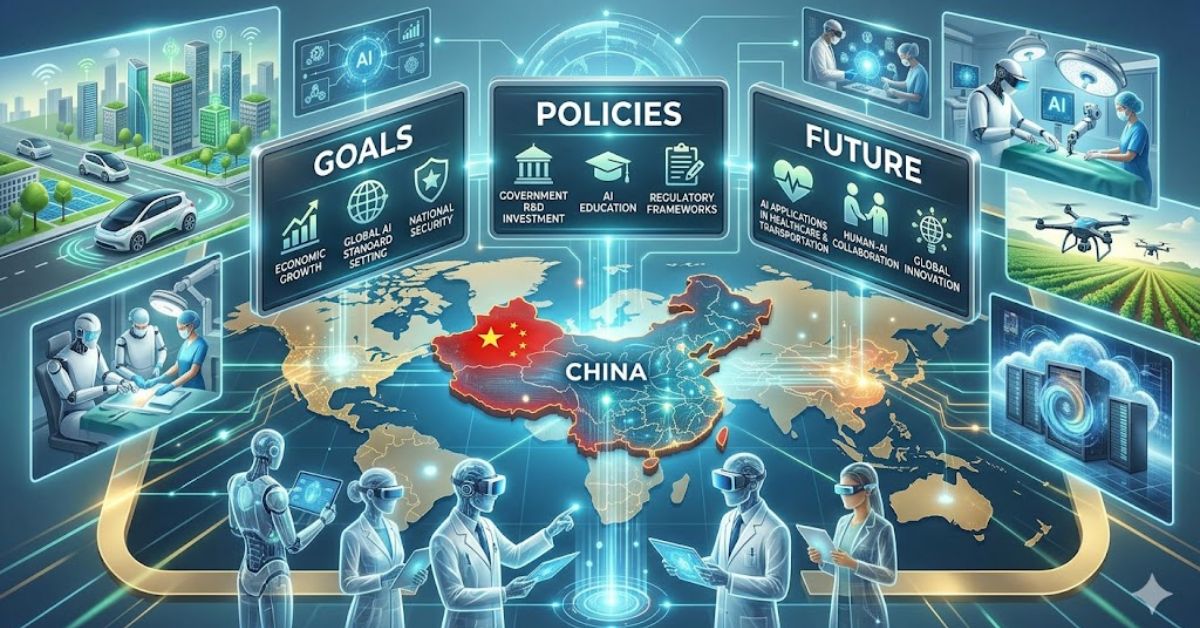
China builds a powerful and long-term AI China Strategy to lead the world in artificial intelligence. The country treats AI as a key driver of economic growth, innovation, and national strength.
The government actively supports AI development through funding, policies, and strong partnerships with private companies.
The AI China Strategy focuses on integrating AI into every major sector. These sectors include healthcare, education, transportation, manufacturing, and security.
China aims to create a smart society where AI improves daily life and boosts efficiency across industries.
China launched its official AI roadmap in 2017. This plan clearly defines its goal to become a global AI leader by 2030.
The strategy follows a step-by-step approach. First, China aims to catch up with global leaders. Then, it focuses on major breakthroughs. Finally, it plans to dominate the global AI market.
AI China Strategy Overview and National Vision
China builds a strong AI strategy to become a global leader in artificial intelligence. The government focuses on making AI a core technology for economic growth, national security, and industrial development. China plans to integrate AI into every major sector, including healthcare, education, transport, manufacturing, and defense.
The AI China strategy aims to create a smart society where machines and humans work together. China invests heavily in AI research and supports companies that build advanced technologies like machine learning, computer vision, and natural language processing. The government also promotes AI adoption in small and large industries to improve productivity.
China uses a long-term road map called “Next Generation Artificial Intelligence Development Plan.” This plan sets clear goals for AI growth and positions China as a world leader by 2030. The AI strategy focuses on three stages: catching up, breakthroughs, and global leadership.
China also builds smart cities that use AI systems for traffic control, security monitoring, and energy management. Companies like Baidu, Alibaba, and Tencent actively support this national vision by developing AI-powered platforms.
Key Focus Areas:
- National AI leadership by 2030
- AI integration in all industries
- Smart cities and digital infrastructure
- Strong AI research ecosystem
- Global AI competition strength
China also encourages public-private partnerships. Government funds support startups and research centers that align with the AI China strategy. This strong cooperation helps China grow faster in AI innovation.
AI China Strategy and Historical Development
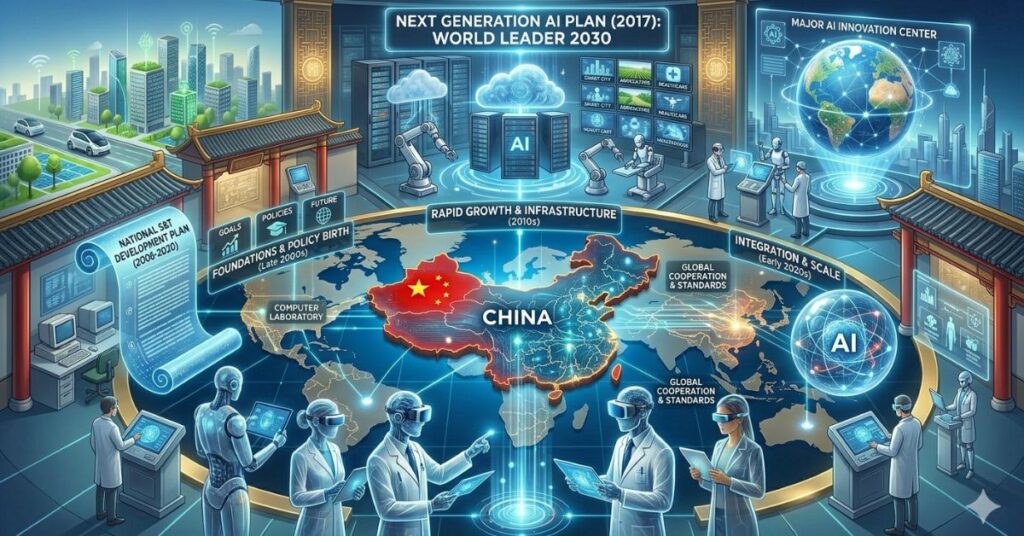
The AI China strategy started with early investments in digital technology and internet infrastructure. China first focused on catching up with Western countries in computing and software development. Over time, China shifted toward innovation and AI leadership.
In the early 2000s, China increased funding for science and technology universities. This step helped build a strong talent base for AI research. Later, in 2017, China officially launched its national AI development plan, marking a major milestone in the AI China strategy.
This strategy built a structured roadmap for AI growth. It encouraged companies and universities to collaborate on AI projects. China also created AI research parks and innovation zones in cities like Beijing, Shanghai, and Shenzhen.
Major phases of development:
- Early digital infrastructure growth
- Internet and mobile technology expansion
- AI research investment increases
- National AI roadmap launch (2017)
- Rapid industrial AI adoption
China’s progress in AI comes from long-term planning. The AI China strategy connects education, industry, and government into one system. This coordination helps China scale AI faster than many countries.
China also studied global AI trends and adapted successful models. It focused on data availability, since large datasets help train AI systems effectively. Chinese tech companies use this advantage to improve AI performance in real-world applications.
Today, the AI China strategy stands as one of the most structured AI development plans in the world.
AI China strategy and Government Policies
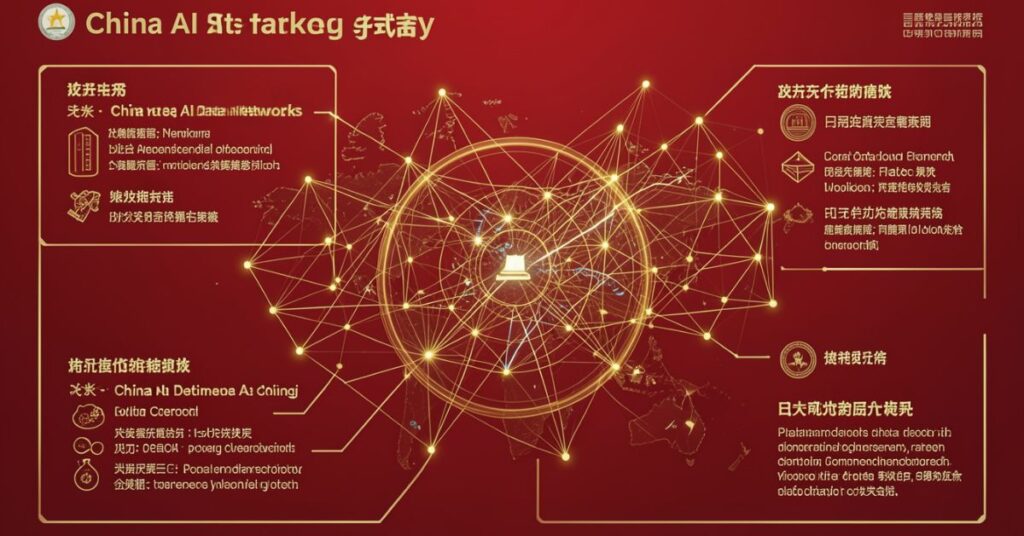
The government plays a central role in the AI China strategy. It creates policies that support AI research, funding, and deployment across industries. China treats AI as a national priority, similar to infrastructure or energy development.
The government provides financial support to AI companies and research institutions. It also builds AI innovation zones where startups can grow quickly. These zones reduce taxes and provide technical resources to developers.
Key government actions in the :
- Large-scale funding for AI research
- Tax benefits for AI companies
- Creation of AI industrial parks
- Support for university research programs
- Data-sharing policies for AI training
The government also focuses on data regulation. Since AI systems need large amounts of data, China allows controlled data access to improve AI model training. This strengthens the AI strategy by improving the accuracy and speed of development.
China also updates education policies to include AI in school and university curricula. Students learn coding, machine learning, and robotics from an early age. This helps build a future-ready workforce.
The AI strategy also includes strong cybersecurity laws. These laws protect national data and ensure safe AI deployment in critical sectors like finance and healthcare.
Government policies act as a foundation for China’s AI ecosystem. Without these policies, the AI strategy would not progress at such a fast pace.
AI China Strategy and Industry Ecosystem Growth

China builds a powerful industry ecosystem under the AI China strategy. Major tech companies, startups, and research centers work together to develop advanced AI systems. This ecosystem helps China scale innovation quickly.
Companies like Baidu, Alibaba, Tencent, and Huawei lead AI development. They invest in cloud computing, facial recognition, autonomous driving, and natural language processing.
Key components of the AI ecosystem:
- Big tech companies (Baidu, Alibaba, Tencent, Huawei)
- AI startups and innovation hubs
- University research labs
- Government-funded institutes
- Cloud computing infrastructure
China also builds strong supply chains for AI hardware. It produces chips, sensors, and computing systems needed for AI applications. This reduces dependency on foreign technology and strengthens the AI strategy.
AI China strategy
| Sector | AI Application |
| Healthcare | Disease detection, diagnostics |
| Transport | Self-driving cars, smart traffic |
| Finance | Fraud detection, smart banking |
| Manufacturing | Robotics and automation |
| Retail | Personalized shopping systems |
The China strategy also supports startup growth. Many AI startups receive funding and mentorship from government programs. This creates a competitive environment where innovation grows quickly.
China’s ecosystem focuses on real-world AI use. Instead of only research, companies deploy AI in daily life systems like mobile apps, e-commerce platforms, and smart assistants.
This strong ecosystem makes the AI strategy one of the most dynamic AI development models globally.
AI China strategy in Military and Security Applications
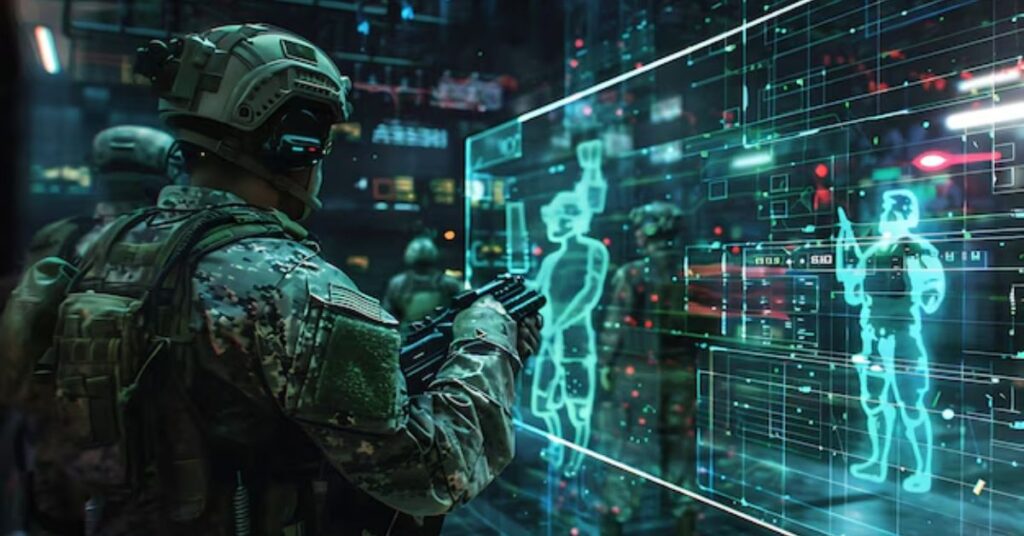
The AI China strategy also includes defense and security development. China uses AI to strengthen national defense systems and improve security monitoring.
AI helps in surveillance systems, facial recognition, border security, and cybersecurity protection. These technologies allow faster decision-making and improved threat detection.
Security applications under :
- Smart surveillance systems
- Facial recognition technology
- Cyber threat detection
- Autonomous defense systems
- Military simulation training
China integrates AI into its military planning systems. AI helps analyze data faster and supports strategic decision-making. It also improves communication systems and battlefield awareness.
The AI China strategy focuses on using AI to increase efficiency in defense operations. However, China also applies strict control measures to ensure secure usage.
AI-powered cameras and monitoring systems are widely used in cities. These systems help maintain public safety and manage large urban populations.
The security aspect of the AI China strategy shows how deeply AI integrates into national systems.
AI China strategy and Education & Talent Development
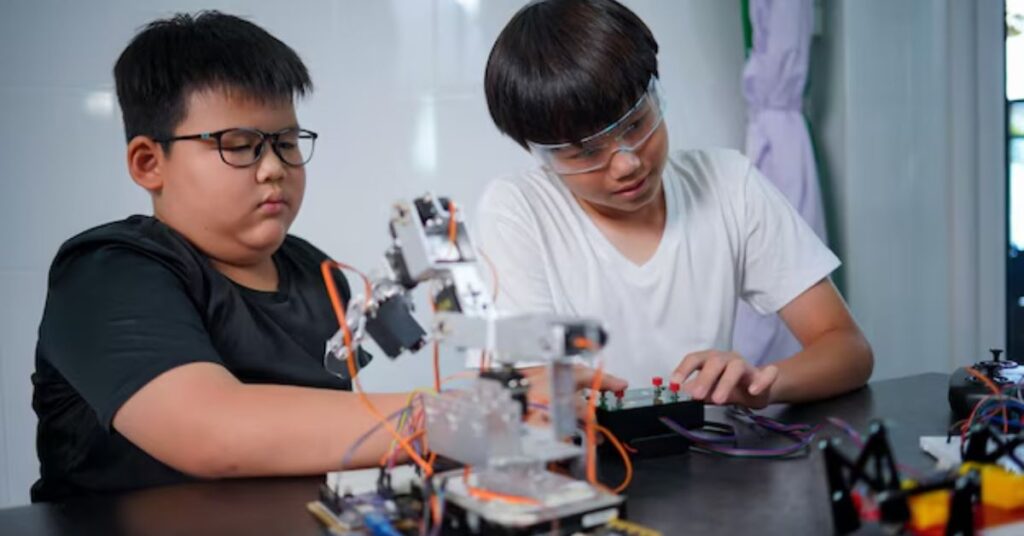
China builds strong talent pipelines for the AI China strategy through education reforms. Schools and universities now teach AI, coding, and robotics as core subjects.
China also sends students abroad for advanced AI research and encourages them to return with global knowledge. Universities partner with tech companies to offer practical AI training.
Education focus areas:
- AI and machine learning courses
- Robotics and automation training
- University-industry partnerships
- AI research scholarships
- Coding education in schools
The AI strategy depends heavily on skilled professionals. Therefore, China invests in STEM education from early grades.
Research centers also play a major role. They conduct experiments in deep learning, neural networks, and data science.
China builds AI talent faster by combining education with industry exposure. Students often work on real projects during their studies.
This approach strengthens the China strategy and ensures continuous innovation.
AI China Strategy and Global Competition

The AI strategy positions China as a strong competitor in the global race. China competes mainly with the United States in AI development.
China focuses on speed, scale, and data advantage. It produces large datasets and rapidly deploys AI technologies in real-world applications.
Global competition factors:
- AI research leadership
- Chip technology development
- Data access and usage
- Talent acquisition
- Innovation speed
China invests heavily in AI patents and research publications. It aims to lead in areas like facial recognition, smart cities, and autonomous systems.
The AI China strategy also supports international partnerships. China collaborates with countries in Asia, Africa, and Europe to expand AI influence.
This global approach helps China strengthen its position in AI diplomacy and trade.
AI China Strategy Challenges and Risks
The AI China strategy faces several challenges. One major challenge includes data privacy concerns. Large-scale data usage raises security and ethical questions.
China also faces international restrictions on advanced semiconductor technology. This affects AI hardware development.
Key challenges:
- Data privacy concerns
- Global tech restrictions
- Talent competition
- Ethical AI usage issues
- High infrastructure costs
China must balance innovation with regulation. The AI China strategy also requires strong ethical guidelines to manage AI risks.
Cybersecurity threats also remain a concern. AI systems must stay protected from hacking and misuse.
Despite challenges, China continues to invest heavily in AI development.
AI China Strategy| Future Outlook and Expansion

The future of the AI China strategy looks highly ambitious. China plans to become the world leader in AI by 2030. It aims to integrate AI into every part of society.
Future development will focus on advanced robotics, autonomous systems, and AI-powered healthcare.
Future goals:
- Global AI leadership by 2030
- Fully smart cities across China
- Advanced AI healthcare systems
- Autonomous transport networks
- AI-driven economy
China will also expand AI exports and international partnerships. The AI China strategy will shape global AI standards and influence future technologies.
AI will continue to transform industries and daily life in China. The country will focus on innovation, efficiency, and global leadership.
Final Thoughts
The China strategy shows how strongly China commits to becoming a global leader. China does not treat AI as a simple technology trend.
Instead, it builds a full national system around it. The government, companies, and universities work together to push innovation at a fast and large scale.
This strategy creates clear strengths. China grows AI research quickly, deploys AI in real industries, and builds smart cities with advanced automation.
It also uses AI to improve transport, healthcare, manufacturing, and public services. These efforts help China improve efficiency and global competitiveness.
At the same time, the AI strategy also faces real challenges. Data privacy concerns, global technology restrictions, and ethical questions continue to shape its future direction. China must balance rapid innovation with responsible AI use.
FAQs
1. What is the AI China strategy?
The AI China strategy is a national plan that aims to make a global leader in artificial intelligence by 2030.
2. Why does China focus on AI development?
China focuses on AI to improve its economy, technological strength, and global competitiveness.
3. Which companies support the AI China strategy?
Companies like Baidu, Alibaba, Tencent, and Huawei support the AI China strategy.
4. What are the main goals of the AI China strategy?
The main goals include AI leadership, smart cities, industrial automation, and advanced research.
5. Does the China strategy include military use?
Yes, it includes AI applications in defense, security, and surveillance systems.
6. What challenges does the AI strategy face?
It faces challenges like data privacy issues, global restrictions, and ethical concerns.
7. What is the future of the China strategy?
The future focuses on global leadership, smart cities, and AI-driven economic growth.