





Introduction
Generative AI Models are changing the way people create content, solve problems, and use technology. These models can create new text, images, videos, music, code, and even voice content.
They do not only analyze data like traditional AI systems. Instead, they generate fresh and original results based on patterns they learn from huge amounts of data.
Today, many businesses, students, writers, developers, and marketers use Generative AI Models in their daily work.
Chatbots write articles, image tools create designs, and coding assistants help developers write software faster. This technology saves time and improves productivity.
Generative AI Models work by studying large datasets. They learn writing styles, image patterns, sound structures, and many other forms of content. After learning, they create new outputs that look natural and useful.
Popular systems like GPT models, diffusion models, and GANs are common examples of this technology. Modern systems often rely on transformer architecture for text and diffusion models for image generation.
In 2026, Generative AI Models continue to grow fast. Companies like Google, OpenAI, and Meta are building stronger and smarter models for business and research.
Google recently placed AI agents at the center of its enterprise strategy, while OpenAI launched GPT-Rosalind for life sciences research.
This guide explains everything about Generative AI in simple words. You will learn how they work, their types, benefits, uses, risks, and future trends.
What Are Generative AI Models

Generative AI Models are artificial intelligence systems that create new content instead of only studying existing information. They can generate text, images, music, voice, video, and software code.
Traditional AI systems mostly classify, predict, or analyze data. For example, they detect spam emails or recommend products. Generative AI goes one step further. They create something new based on what they learn.
For example:
Generative AI can create
- blog articles
- product descriptions
- social media posts
- realistic images
- background music
- computer code
- chatbot replies
- marketing content
- voice recordings
- video scripts
These models learn from huge training datasets. They study millions of examples and understand patterns. Then they use those patterns to produce fresh outputs.
f(x)=P(\text{next token}\mid \text{previous tokens})
Language models predict the next most likely token based on previous tokens, which helps them generate natural text.
Many popular tools today use Generative AI. These include writing assistants, image generators, AI chatbots, and coding tools.
The main goal of Generative AI is to make content creation faster, easier, and smarter.
How Generative AI Models Work
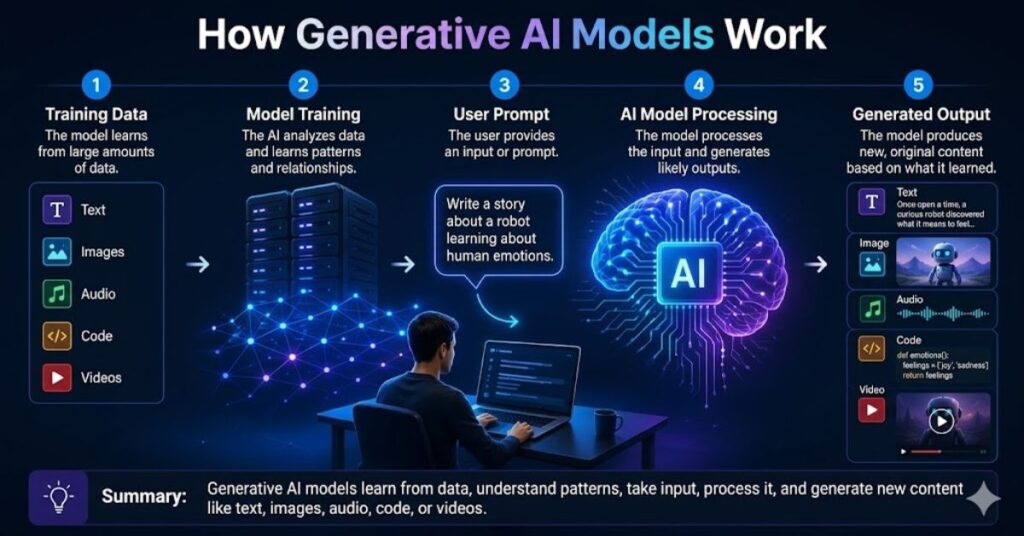
Generative AI Models work by learning patterns from large amounts of training data. They do not copy exact content. They understand structure, style, and relationships inside the data.
For example, if a model learns from millions of books, it understands grammar, sentence flow, and writing style. Then it creates new sentences that sound natural.
The process starts with training. Developers feed the model huge datasets like text, images, audio, or code. The model studies this information and builds internal patterns.
During use, the user gives a prompt.
For example:
Example prompts
- Write an article about health
- Create a logo for my company
- generate Python code
- make a song in jazz style
- Create a product description
The model reads the prompt and creates a response based on learned patterns.
Different model types use different systems. Text models often use transformers. Image tools often use diffusion models. Older image systems also used GANs and VAEs.
Simple Working Table
| Step | Process |
| 1 | Collect large training data |
| 2 | Train the model on patterns |
| 3 | User enters a prompt |
| 4 | The model predicts the best output |
| 5 | Final content gets generated |
This process makes Generative AI Models powerful for many industries.
Types of Generative AI Models
Different types of Generative AI Models work for different tasks. Some create text, while others generate images, music, or videos.
Understanding these types helps users choose the right tool for the right job.
Main types
- Large Language Models (LLMs)
- Diffusion Models
- Generative Adversarial Networks (GANs)
- Variational Autoencoders (VAEs)
- Transformer Models
- Multimodal Models
- AI Agent Models
Large Language Models like GPT create text, answer questions, and write code. Diffusion models create images from prompts and are widely used in image generation today.
GANs use two networks that compete with each other to create realistic images. VAEs help generate images and patterns with smooth control.
Multimodal models work with text, images, and audio together. They handle multiple tasks inside one system.
AI agent models are becoming more popular in 2026. These models do more than answer prompts. They plan tasks and make decisions for users. Google highlighted this shift by focusing on AI agents for enterprise tools.
Each type supports different business and personal needs.
Popular Generative AI Models in 2026

Many powerful Generative AI Models lead the market in 2026. These systems help users across writing, coding, research, design, and business automation.
Some models focus on text generation, while others work better for images, science, or enterprise use.
Top AI Models today
- GPT models
- Gemini models
- Claude models
- Llama models
- Stable Diffusion
- DALL·E
- Midjourney
- Muse Spark
GPT models help with writing, coding, and research. OpenAI also introduced GPT-Rosalind for life sciences research to support drug discovery and experimental planning.
Gemini supports large context windows and enterprise workflows. Claude focuses strongly on business productivity and coding.
Stable Diffusion and DALL·E create images from text prompts. Midjourney is also famous for creative visuals.
Meta introduced Muse Spark as a stronger reasoning model for science, math, and health tasks.
Comparison Table
| Model | Main Use |
| GPT | Writing, coding, research |
| Gemini | Enterprise AI, long context |
| Claude | Business workflows |
| Stable Diffusion | Image generation |
| DALL·E | Creative visuals |
| Muse Spark | Reasoning tasks |
These Generative AI Models continue to improve every month.
Benefits of Generative AI Models
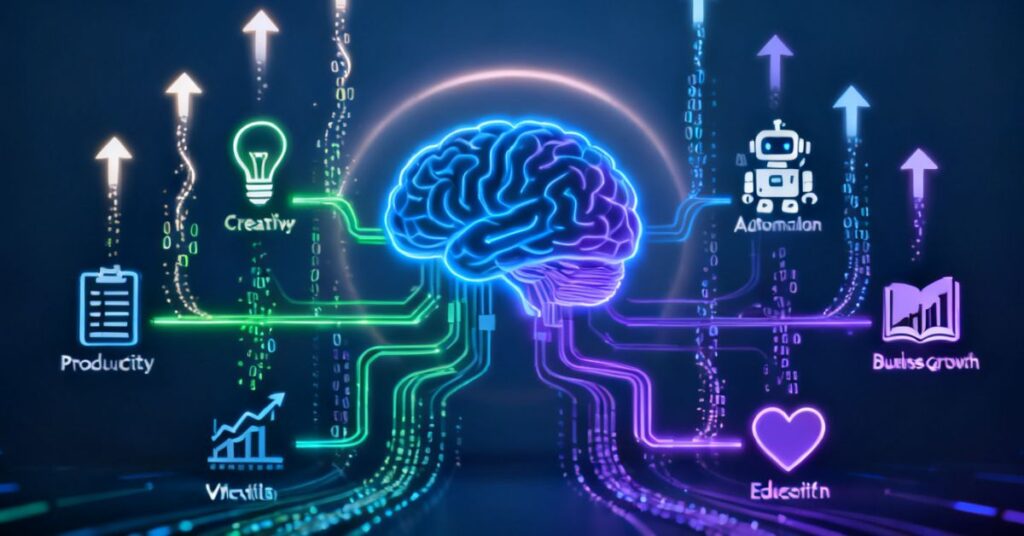
Generative AI Models offer many benefits for businesses and individuals. They improve speed, reduce costs, and help people work smarter.
Many companies now use these tools to save time and increase productivity.
Key Benefits
- faster content creation
- lower business costs
- better customer support
- improved software development
- stronger marketing campaigns
- easier design creation
- better research support
- personalized user experience
Writers can create articles faster. Designers can generate image ideas quickly. Developers can write and debug code with less effort.
Businesses use AI chatbots to answer customer questions 24/7. Marketing teams create emails, ads, and product descriptions faster.
Healthcare researchers also benefit. OpenAI’s GPT-Rosalind helps with evidence review and experiment planning in life sciences.
Generative AI Models also help small businesses compete with larger companies because they reduce manual work.
These tools improve both creativity and productivity.
Use Cases of Generative AI Models
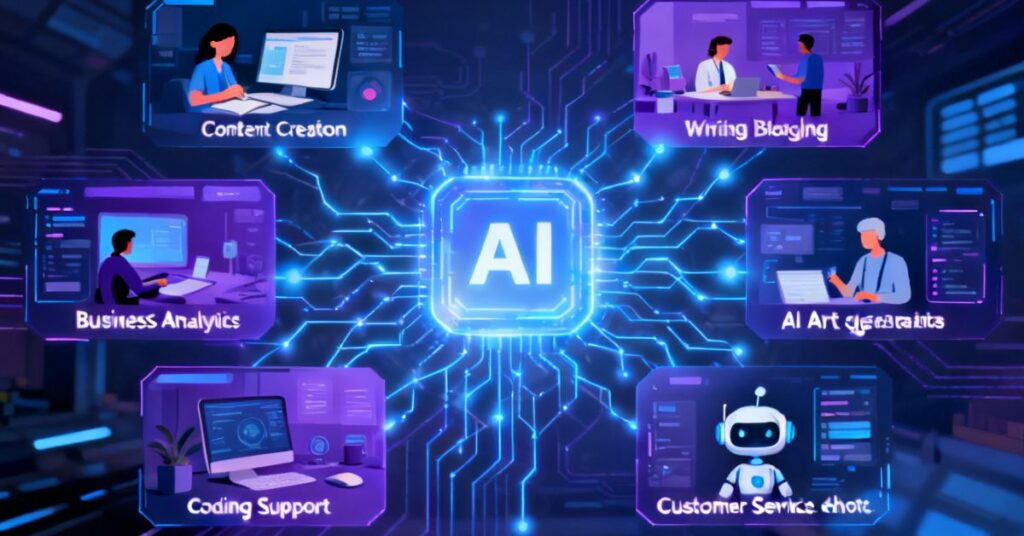
Generative AI Models support many industries. Their use grows every year because they solve real problems.
Different industries use them in different ways.
Common use cases
- education
- healthcare
- software development
- digital marketing
- eCommerce
- customer support
- banking
- entertainment
- research
- manufacturing
In education, students use AI for learning support and summaries.
In healthcare, researchers use AI for medical reports and drug discovery.
Developers use coding assistants to write and fix software.
Marketing teams use AI for SEO content, product descriptions, and ad copy.
Banks use AI for customer service and fraud analysis.
Entertainment companies use it for music, video scripts, and creative design.
This wide usage makes Generative AI one of the most valuable technologies today.
Challenges of Generative AI Models

Generative AI Models are powerful, but they also create challenges. Users must understand these risks before using them fully.
AI does not always produce perfect results.
Main Challenges
- wrong information
- Bias in outputs
- copyright concerns
- privacy risks
- security issues
- high training costs
- job replacement fears
- overdependence on AI
Sometimes AI creates false answers that sound correct. This problem can confuse users.
Bias also appears if the training data contains unfair patterns.
Copyright issues happen when models train on protected content.
Privacy becomes important when companies upload sensitive data.
Training advanced models also needs huge computing power and special chips. Google introduced new TPU chips to improve this process.
Businesses must use Generative AI with clear rules and human review.
Responsible use matters more than speed.
Future of Generative AI Models
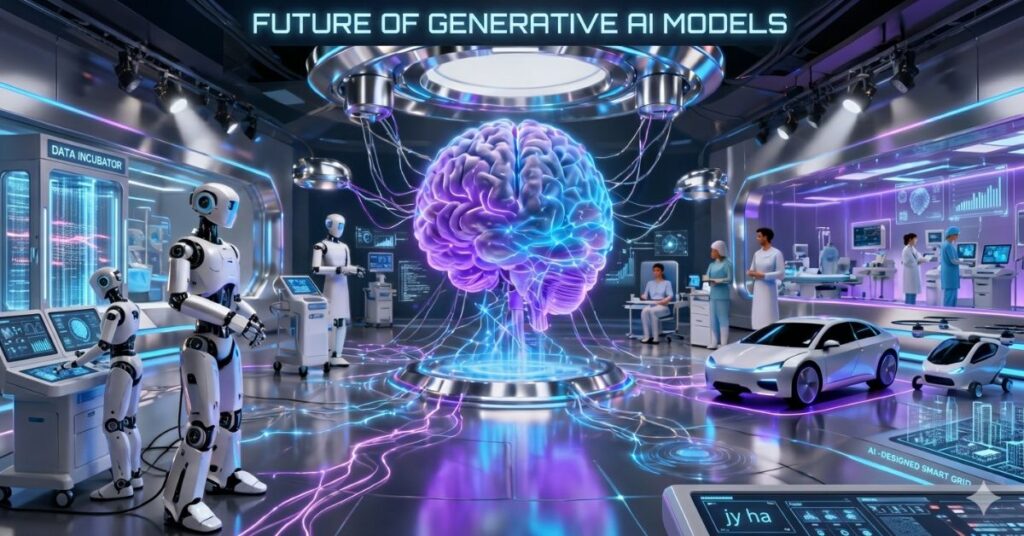
The future of Generative AI Models looks strong. Experts expect faster, smarter, and more specialized systems in the coming years.
Companies are moving from simple AI tools to advanced AI agents and domain-specific models.
Future Trends
- smarter AI agents
- larger context windows
- multimodal systems
- industry-specific AI models
- better security controls
- stronger enterprise adoption
- real-time decision systems
- AI-native business operations
Models now move beyond simple content generation. They help with planning, reasoning, and workflow management.
Enterprise AI in 2026 focuses more on governance, security, and specialized models rather than only chatbots.
Experts also expect context windows to grow much larger, helping models process entire books, codebases, and company knowledge systems in one request (Hashmeta).
Generative AI will become a core business tool, not just a helpful feature.
The future will reward companies that use AI with smart planning.
Conclusion
Generative AI Models are changing the digital world very fast. They create text, images, code, voice, and many other forms of content at high speed and high quality.
Businesses use them for productivity. Students use them for learning. Developers use them for coding. Researchers use them for discovery.
These models save time and improve work quality, but users must also manage risks like wrong information, privacy concerns, and bias.
The future of Generative Models will bring stronger AI agents, better reasoning systems, and smarter business automation.
Companies that learn and use this technology today will stay ahead tomorrow.
Generative AI are no longer just a trend. They are becoming a major part of modern life and business success.
FAQs
What are Generative AI Models?
Generative Models are AI systems that create new content like text, images, code, music, and videos based on learned patterns from large datasets.
How do Generative AI Models work?
They study huge amounts of training data, learn patterns, and then generate new outputs when users provide prompts.
Which industries use Generative AI ?
Healthcare, education, software development, marketing, banking, eCommerce, and entertainment all use Generative AI.
Are Generative AI Models safe?
They are useful, but users must check the outputs carefully because AI can produce incorrect information, bias, and privacy risks.
What is the future of Generative AI?
The future includes smarter AI agents, larger context windows, multimodal systems, and stronger business automation.
Which are the best Generative AI Models in 2026?
Popular models include GPT, Gemini, Claude, Stable Diffusion, DALL·E, and Muse Spark.